The Usual Suspects JE-8086 JP-8000 Emulator Now Supports JP-8080 Firmware!
They Finally Did It!
Now JE-8086 fully supports JP-8000 AND JP-8080 firmware, so you can run either synth in the plugin, with full functionality!
So if you have been using our JP soundbanks in JE-8086 and finding some patches sounded weird or out of tune when loading (because of feature mismatches between the JP-8080 we own, the older JP-8000), those issues are now a thing of the past! Now You can have your JP and eat it, too!
Grab the plugin here and get Trancing!
$68.00 (MSRP $81.00 if purchased individually - Save $13 / 15%)
Unlock the full high-energy rave potential for your synthesizer with the definitive hard dance sound collection. The Kulshan Studios Heavy Hitters Roland JP-8000 & JP-8080 Hard Dance Anthology brings together three dedicated soundsets engineered for festival-ready screeches, aggressive eurodance leads, slamming euphoric hardstyle plucks, and high-octane hardcore basses, delivering 150 production-ready performances across 3 focused packs.
Whether you are producing peak-time Hands Up, 2000s Eurodance, Rawstyle, Euphoric Hardstyle, UK Hardcore, or Frenchcore, this complete collection transforms your JP into an unrelenting hard dance powerhouse. Every performance leverages the signature virtual analog engine, monster SuperSaws, gritty cross-modulation, and built-in multi-effects for maximum power.
Key Features:
Total Presets: 150 handcrafted Performance patches organized across 3 individual soundbanks (50 patches per bank).
Hardware & Plugin Compatibility: 100% compatible with the hardware Roland JP-8000 keyboard and Roland JP-8080 rack module. Fully compatible with software emulations and synth engines including The Usual Suspects JE-8086, discoDSP Corona, Adam Szabo Airwave, and Arturia Jup-8000 V.
Zero Filler: Every soundbank is strictly genre-focused. No random clangs, useless sound effects, or out-of-place filler patches.
What’s Included:
Shout! Hands Up Soundset: 50 slamming Hands Up & Eurodance performances packed with aggressive 90s/2000s rave leads, detuned buzzers, and driving basses.
Havoc Hardstyle Soundset: 50 banging Euphoric, Rawstyle, NuStyle & Early Hardstyle presets featuring screaming synth leads, distorted screeches, and grimy reverse bass patches.
Turbo Hardcore Soundset: 50 high-octane UK Hardcore, Happy Hardcore, Terrorcore, Frenchcore, and Gabber performances engineered for maximum energy.
What You Get:
All patches in standard .syx / .mid / .pfm / .artx format, sorted into their specific bank folders inside a single bulk .zip file.
Why Grab The Heavy Hitters Hard Dance Anthology?
Purchasing these 3 hard dance banks individually at $27 adds up to $81. The Kulshan Studios Heavy Hitters Roland JP-8000 & JP-8080 Hard Dance Anthology gives you instant access to Kulshan Studios' complete collection of peak-time rave, hardstyle, and hardcore JP presets at a 15% discount, ensuring you have the exact right hardware tone ready the moment inspiration strikes in the studio.
(Note: This is a digital download containing SysEx / MIDI / ARTX / PFM patch files. Loadable via standard MIDI librarian software, hardware SysEx dumps, WinJPLib, or compatible VST emulations).
~ All bundles are excluded from additional discount codes and sales.
“The preset banks by Kulshan Studios immediately brings out the very best of what the Roland JP-8080 has to offer.” - Armada Music Publishing
50 uplifting Trance dual-layer performances, compatible with the Roland JP-8000 and JP-8080 hardware synths. This soundbank is 100% Trance-oriented, which means no weird brass, pianos, or FX. The patches in Altitude come straight out of songs written using the JP-8000 and JP-8080 synths. So this soundset is designed to fully exploit the JP’s iconic SuperSaw oscillator, lush chorus, and virtual analog sound engine to their fullest potential!
Performances in Altitude are based on sounds from songs by the likes of ATB, Phalanx, Alphazone, Armin van Buuren, Vengeance, BT, Ratty, Scooter, and many many more!
And to cap off the bank some performances were set to INIT, so you have room to write and store your own sounds without overwriting any existing sounds!
Only 3rd party FX used in this video was ValhallaRoom reverb, on the leads, pads, and plucks.
Sounds in this pack are suitable for the Uplifting Trance, Hard Trance, Tech Trance, Progressive Trance, and Classic Trance genres, and are organized by category into Leads, Plucks, Pads, and Basses, for quick reference
All performances are royalty-free and delivered instantly via email as a 24-hour download link
Requirements: Roland JP-8000 or JP-8080 synthesizer
Also compatible with Adam Szabo Airwave, The Usual Suspects JE-8086, DiscoDSP Retromulator, DiscoDSP Corona VSTi using included .syx file, and Arturia Jup-8000 V VSTi using included split Performance files
“The preset banks by Kulshan Studios immediately brings out the very best of what the Roland JP-8080 has to offer. A must have for any trance producer with one of these legendary synthesizers.” - Armada Music Publishing
50 uplifting Trance dual-layer performances, compatible with the Roland JP-8000 and JP-8080 hardware synths. This soundbank is 100% Trance-oriented, which means no weird brass, pianos, or FX. The sounds in Altitude 2 come straight out of songs written using the JP-8000 and JP-8080 synths. So this soundset is designed to fully exploit the JP’s iconic SuperSaw oscillator, lush chorus, and virtual analog sound engine to their fullest potential!
Performances in Altitude 2 are based on sounds from songs by the likes of Arctic Moon, Jorn van Deynhoven, Alphazone, Marcel Woods, Mike Koglin, K-System, DuMonde, Marc et Claude, Gareth Emery, and many many more!
And to cap off the bank some slots were set to INIT, so you have room to write and store your own sounds without overwriting any existing presets!
Only 3rd party FX used in this video was ValhallaRoom reverb, on the leads, pads, and plucks.
Sounds in this pack are suitable for the Uplifting Trance, Hard Trance, Tech Trance, Progressive Trance, and Classic Trance genres, and are organized by category into Leads, Plucks, Pads, and Basses, for quick reference
All performances are royalty-free and delivered instantly via email as a 24-hour download link
Requirements: Roland JP-8000 or JP-8080 synthesizer
Also compatible with Adam Szabo Airwave, The Usual Suspects JE-8086, DiscoDSP Retromulator, DiscoDSP Corona VSTi using included .syx file, and Arturia Jup-8000 V VSTi using included split Performance files
“The preset banks by Kulshan Studios immediately brings out the very best of what the Roland JP-8080 has to offer. A must have for any trance producer with one of these legendary synthesizers.” - Armada Music Publishing

50 uplifting Trance dual-layer performances, compatible with the Roland JP-8000 and JP-8080 hardware synths. This soundbank is 100% Trance-oriented, which means no weird brass, pianos, or FX. The sounds in Altitude 3 come straight out of songs written using the JP-8000 and JP-8080 synths. So this soundset is designed to fully exploit the JP’s iconic SuperSaw oscillator, lush chorus, and virtual analog sound engine to their fullest potential!
Performances in Altitude 3 are based on sounds from songs by the likes of Tiesto, Craig Connelly, Aramanja, Gaia, Mike Koglin, Vengeance, DuMonde, Johnson & Corbett, Rank 1, Armin van Buuren, Talla 2XLC, Menno De Jong, Fragma, Paul Van Dyk, and many many more!
And to cap off the bank some slots were set to INIT, so you have room to write and store your own sounds without overwriting any existing presets!
Only 3rd party FX used in this video was ValhallaRoom reverb, on the leads, pads, and plucks.
Sounds in this pack are suitable for the Uplifting Trance, Hard Trance, Tech Trance, Progressive Trance, and Classic Trance genres, and are organized by category into Leads, Plucks, Pads, and Basses, for quick reference
All performances are royalty-free and delivered instantly via email as a 24-hour download link
Requirements: Roland JP-8000 or JP-8080 synthesizer
Also compatible with Adam Szabo Airwave, The Usual Suspects JE-8086, DiscoDSP Retromulator, DiscoDSP Corona VSTi using included .syx file, and Arturia Jup-8000 V VSTi using included split Performance files
“The preset banks by Kulshan Studios immediately brings out the very best of what the Roland JP-8080 has to offer. A must have for any trance producer with one of these legendary synthesizers.” - Armada Music Publishing
50 uplifting Trance dual-layer performances, compatible with the Roland JP-8000 and JP-8080 hardware synths. This soundbank is 100% Trance-oriented, which means no weird brass, pianos, or FX. The sounds in Altitude 4 come straight out of songs written using the JP-8000 and JP-8080 synths. So this soundset is designed to fully exploit the JP’s iconic SuperSaw oscillator, lush chorus, and virtual analog sound engine to their fullest potential!
Performances in Altitude 4 are based on sounds from songs by the likes of Ferry Corsten, Gouryella, Alphazone, Armin van Buuren, Mike Koglin, Vengeance, Vincent De Moor, Scott Bond, Alex MORPH, Pulser, Above & Beyond, Ilan Bluestone, Giuseppe Ottaviani, Solarstone, Sophie Sugar, Mauro Picotto, Ace Da Brain, K-System, Scooter, Cosmic Gate, and many many more!
And to cap off the bank some slots were set to INIT, so you have room to write and store your own sounds without overwriting any existing presets!
Only 3rd party FX used in this video was Virus TI2 reverb, on the leads, pads, and plucks.
Sounds in this pack are suitable for the Uplifting Trance, Hard Trance, Tech Trance, Progressive Trance, and Classic Trance genres, and are organized by category into Leads, Plucks, Pads, and Basses, for quick reference
All performances are royalty-free and delivered instantly via email as a 24-hour download link
Requirements: Roland JP-8000 or JP-8080 synthesizer
Also compatible with Adam Szabo Airwave, The Usual Suspects JE-8086, DiscoDSP Retromulator, DiscoDSP Corona VSTi using included .syx file, and Arturia Jup-8000 V VSTi using included split Performance files
“The preset banks by Kulshan Studios immediately brings out the very best of what the Roland JP-8080 has to offer. A must have for any trance producer with one of these legendary synthesizers.” - Armada Music Publishing

50 uplifting Trance dual-layer performances, compatible with the Roland JP-8000 and JP-8080 hardware synths. This soundbank is 100% Trance-oriented, which means no weird brass, pianos, or FX. The sounds in Altitude 5 come straight out of songs written using the JP-8000 and JP-8080 synths. So this soundset is designed to fully exploit the JP’s iconic SuperSaw oscillator, lush chorus, and virtual analog sound engine to their fullest potential!
Performances in Altitude 5 are based on sounds from songs by the likes of Andy Blueman, Nitrous Oxide, Jorn van Deynhoven, Phalanx, Akira Kayosa, 3XM, Arctic Moon, Solarstone, DejaVu, Artur Obraans, Ruff Stuff, Carl B, Scot Project, Earth Inc, Suncatcher, Ace Da Brain, Markus Schulz, Alex M.O.R.P.H., Oliver Smith, Giuseppe Ottaviani, Warp Brothers, ATB, Sol 7, Standerwick, Aimoon, and many many more!
And to cap off the bank some slots were set to INIT, so you have room to write and store your own sounds without overwriting any existing presets!
Only 3rd party FX used in this video was Virus TI2 reverb, on the leads, pads, and plucks.
Sounds in this pack are suitable for the Uplifting Trance, Hard Trance, Tech Trance, Progressive Trance, and Classic Trance genres, and are organized by category into Leads, Plucks, Pads, and Basses, for quick reference
All performances are royalty-free and delivered instantly via email as a 24-hour download link
Requirements: Roland JP-8000 or JP-8080 synthesizer
Also compatible with Adam Szabo Airwave, The Usual Suspects JE-8086, DiscoDSP Retromulator, DiscoDSP Corona VSTi using included .syx file, and Arturia Jup-8000 V VSTi using included split Performance files
“The preset banks by Kulshan Studios immediately brings out the very best of what the Roland JP-8080 has to offer. A must have for any trance producer with one of these legendary synthesizers.” - Armada Music Publishing

50 uplifting Trance dual-layer performances, compatible with the Roland JP-8000 and JP-8080 hardware synths. This soundbank is 100% Trance-oriented, which means no weird brass, pianos, or FX. The sounds in Altitude 6 come straight out of songs written using the JP8000 and JP8080 synths. So this soundset is designed to fully exploit the JP’s iconic SuperSaw oscillator, lush chorus, and virtual analog sound engine to their fullest potential!
Performances in Altitude 6 are based on sounds from songs by the likes of S.H.O.K.K., Phalanx, Alphazone, Armin van Buuren, 4 Strings, Ice, Wavetraxx, Ampire, Clokx, Ferrin & Low, Jcquence, Ruff Stuff, Cosmo Nova, Selu Vibra, E Nomine, trance[]control, Ron van den Beuken, Talla 2XLC, Bas & Ram, Sol 7, Denga & Manus, Nebulus, Arome, Vengeance, Warp Brothers, Basis 1, Floorburner, Ace’s Delight, and many many more!
And to cap off the bank some slots were set to INIT, so you have room to write and store your own sounds without overwriting any existing presets!
Only 3rd party FX used in this video was Virus TI2 reverb, on the leads, pads, and plucks.
Sounds in this pack are suitable for the Uplifting Trance, Hard Trance, Tech Trance, Progressive Trance, and Classic Trance genres, and are organized by category into Leads, Plucks, Pads, and Basses, for quick reference
All performances are royalty-free and delivered instantly via email as a 24-hour download link
Requirements: Roland JP-8000 or JP-8080 synthesizer
Also compatible with Adam Szabo Airwave, The Usual Suspects JE-8086, DiscoDSP Retromulator, DiscoDSP Corona VSTi using included .syx file, and Arturia Jup-8000 V VSTi using included split Performance files
“The preset banks by Kulshan Studios immediately brings out the very best of what the Roland JP-8080 has to offer. A must have for any trance producer with one of these legendary synthesizers.” - Armada Music Publishing
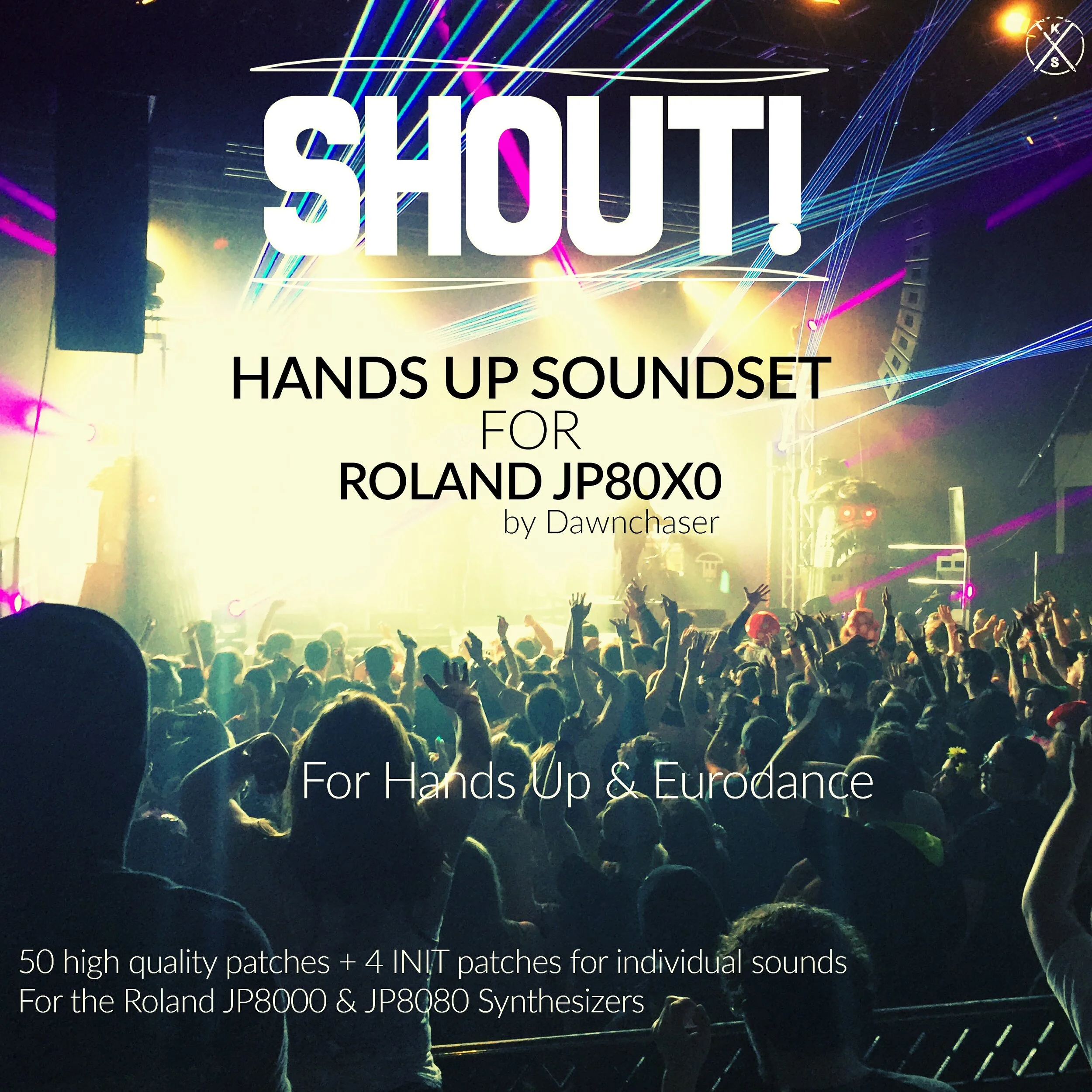
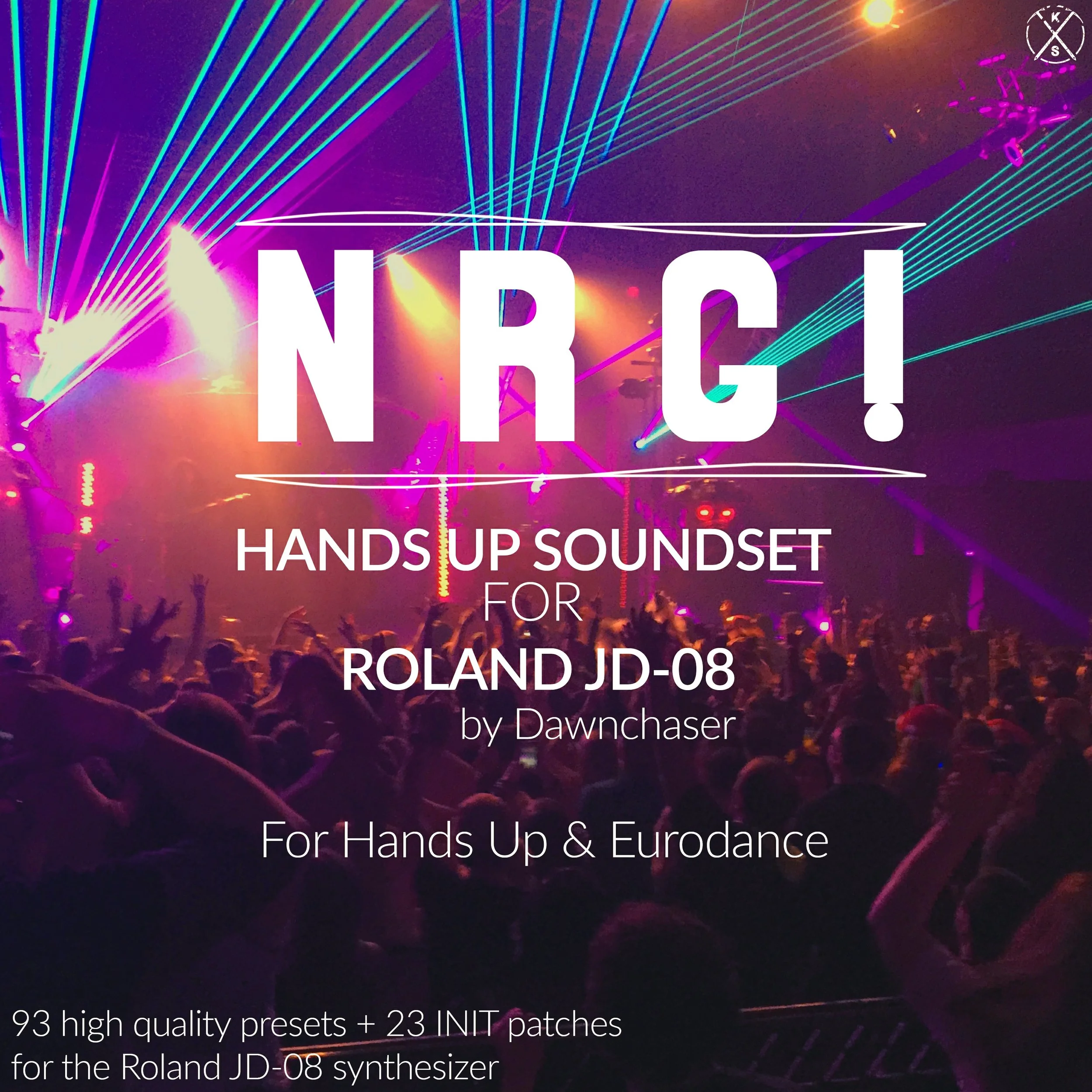
50 high-energy Hands Up dual-layer performances, compatible with the Roland JP-8000 and JP-8080 hardware synths. This soundbank is 100% Hands Up-oriented, which means no weird brass, pianos, or FX. The sounds in Shout! come straight out of songs written using the JP-8000 and JP-8080 synths. So this soundset is designed to fully exploit the JP’s iconic SuperSaw oscillator, lush chorus, and virtual analog sound engine to their fullest potential!
Performances in Shout! are based on sounds from songs by the likes of Cascada, Groove Coverage, Alex Megane, Rob Mayth, Master Blaster, Zombie Nation, Floorfilla, Gabry Ponte, DJ Gollum, Sven-R-G vs Bass-T, and many many more!
And to cap off the bank some slots were set to INIT, so you have room to write and store your own sounds without overwriting any existing presets!
Only 3rd party FX used in the demo was ValhallaRoom reverb, on the leads, pads, and plucks.
Sounds in this pack are suitable for the Hands Up and Eurodance genres, and are organized by category into Leads, Plucks, Pads, and Basses, for quick reference
All performances are royalty-free and delivered instantly via email as a 24-hour download link
Requirements: Roland JP-8000 or JP-8080 synthesizer
Also compatible with Adam Szabo Airwave, The Usual Suspects JE-8086, DiscoDSP Retromulator, DiscoDSP Corona VSTi using included .syx file, and Arturia Jup-8000 V VSTi using included split Performance files
“The preset banks by Kulshan Studios immediately brings out the very best of what the Roland JP-8080 has to offer.” - Armada Music Publishing
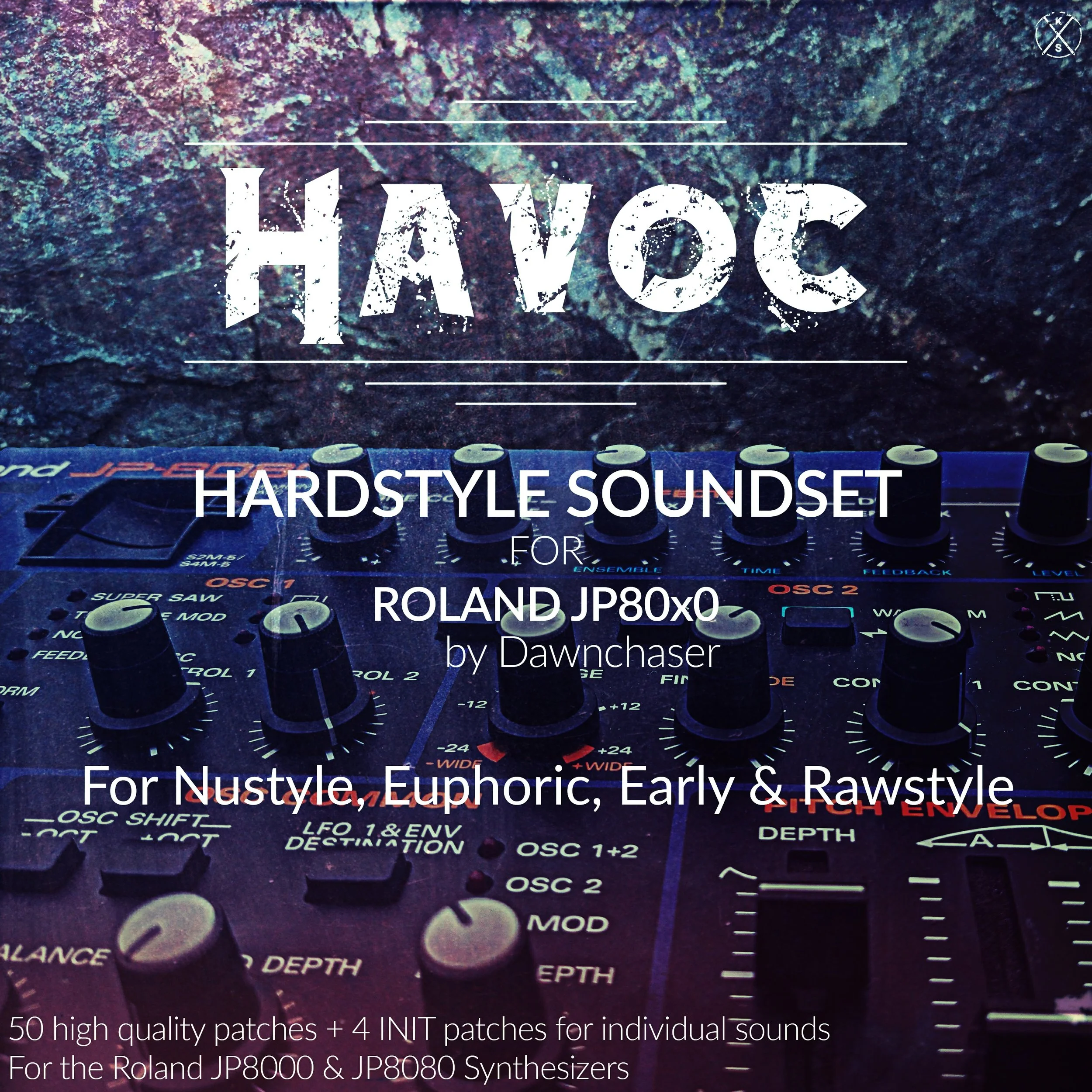
50 hard-hitting Hardstyle dual-layer performances, compatible with the Roland JP-8000 and JP-8080 hardware synths. This soundbank is 100% Hardstyle-oriented, which means no weird brass, pianos, or FX. The sounds in Havoc come straight out of songs written using the JP-8000 and JP-8080 synths. So this soundset is designed to fully exploit the JP’s iconic SuperSaw oscillator, gritty distortion, and virtual analog sound engine to their fullest potential!
Performances in Havoc are based on sounds from songs by the likes of Anderex, Dual Damage, Crystal Lake, Zatox, Headhunterz, Phuture Noize, Brainkicker, Fraw, The KGBs, SMD, Brennan Heart, Coone, Project One, Refuzion, Noisecontrollers, Da Tweekaz, Zany, Wasted Penguinz, The Prophet, and many many more!
And to cap off the bank some slots were set to INIT, so you have room to write and store your own sounds without overwriting any existing presets!
Only 3rd party FX used in the demo was Virus TI2 reverb, on the leads, pads, and plucks.
Sounds in this pack are suitable for the Early Hardstyle, Nustyle, Rawstyle, and Euphoric Hardstyle genres, and are organized by category into Leads, Plucks, Pads, and Basses, for quick reference
All performances are royalty-free and delivered instantly via email as a 24-hour download link
Requirements: Roland JP-8000 or JP-8080 synthesizer
Also compatible with Adam Szabo Airwave, The Usual Suspects JE-8086, DiscoDSP Retromulator, DiscoDSP Corona VSTi using included .syx file, and Arturia Jup-8000 V VSTi using included split Performance files
“The preset banks by Kulshan Studios immediately brings out the very best of what the Roland JP-8080 has to offer.” - Armada Music Publishing

50 high-octane Hardcore dual-layer performances, compatible with the Roland JP-8000 and JP-8080 hardware synths. This soundbank is 100% Hardcore-oriented, which means no weird brass, pianos, or FX. The sounds in Turbo come straight out of songs written using the JP-8000 and JP-8080 synths. So this soundset is designed to fully exploit the JP’s iconic SuperSaw oscillator, gritty distortion, and virtual analog sound engine to their fullest potential!
Performances in Turbo are based on sounds from songs by the likes of Angerfist, Miss K8, Scott Brown, Korsakoff, Sefa, Ophidian, Hixxy, Brisk & Ham, Predator, Dr Peacock, Nexes, Triplestar, Plus System, Party Animals, Nosferatu, Gammer, Evil Activities, Neophyte, Dougal, The Viper, and many many more!
And to cap off the bank some slots were set to INIT, so you have room to write and store your own sounds without overwriting any existing presets!
Only 3rd party FX used in the demo was Virus TI2 reverb, on the leads, pads, and plucks.
Sounds in this pack are suitable for the UK Hardcore, Happy Hardcore, Terrorcore, Frenchcore, Gabber, and Uptempo genres, and are organized by category into Leads, Plucks, Pads, and Basses, for quick reference
All performances are royalty-free and delivered instantly via email as a 24-hour download link
Requirements: Roland JP-8000 or JP-8080 synthesizer
Also compatible with Adam Szabo Airwave, The Usual Suspects JE-8086, DiscoDSP Retromulator, DiscoDSP Corona VSTi using included .syx file, and Arturia Jup-8000 V VSTi using included split Performance files
“The preset banks by Kulshan Studios immediately brings out the very best of what the Roland JP-8080 has to offer.” - Armada Music Publishing
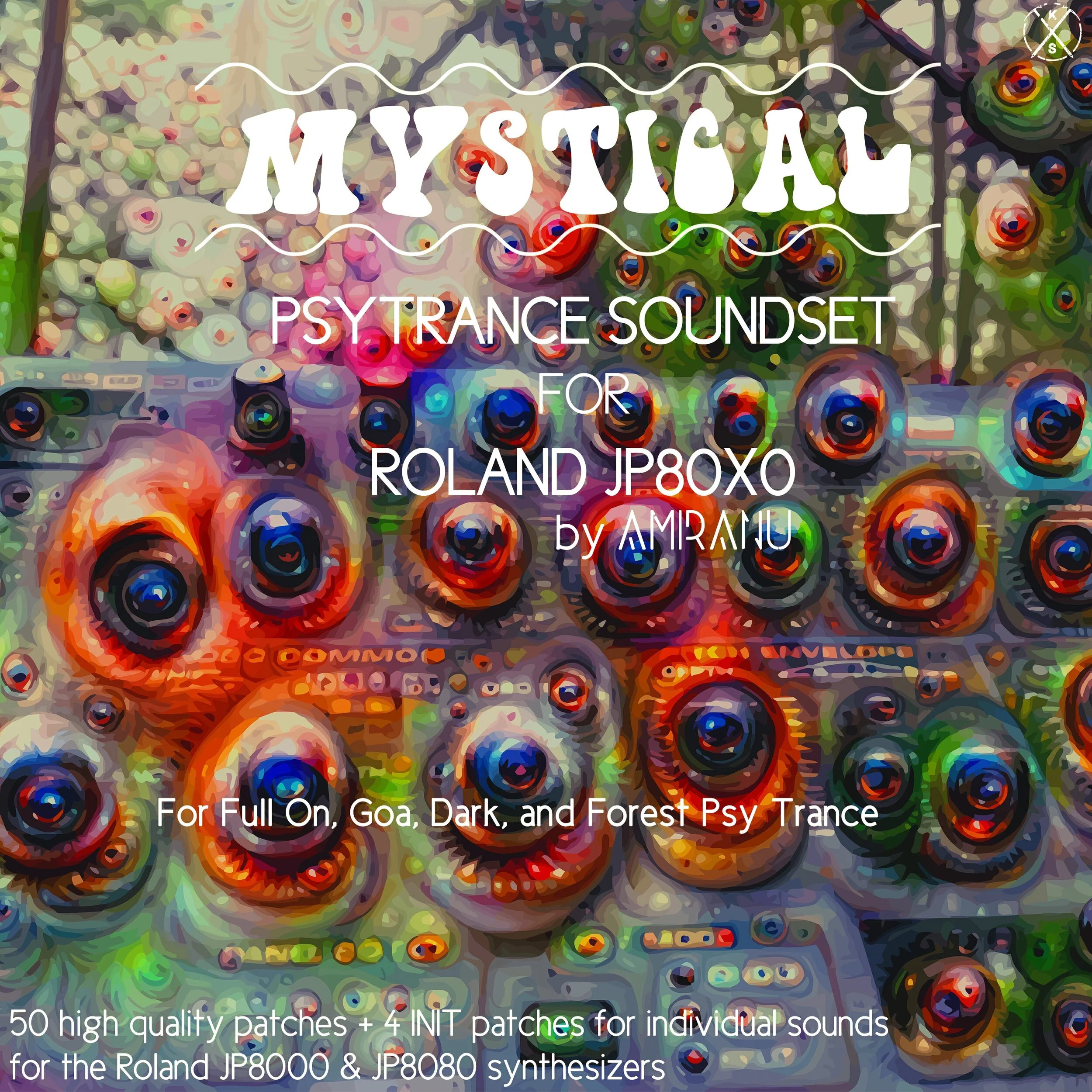
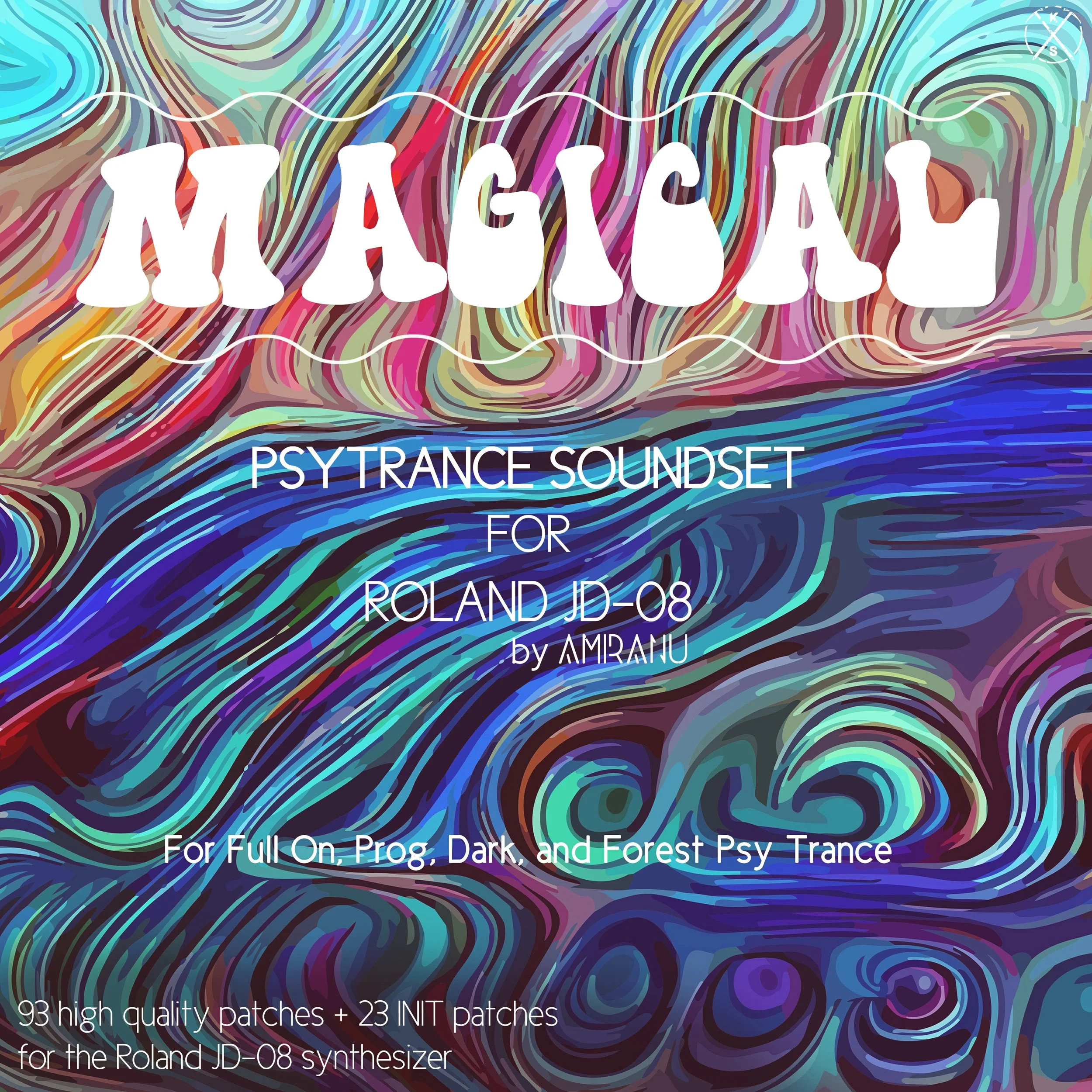
50 hypnotic Psytrance dual-layer performances, compatible with the Roland JP-8000 and JP-8080 hardware synths. This soundbank is 100% Psytrance-oriented, which means no weird brass, pianos, or FX. The patches in Mystical come straight out of songs written using the JP-8000 and JP-8080 synths. So this soundset is designed to fully exploit the JP’s iconic SuperSaw oscillator, powerful modulation, and virtual analog sound engine to their fullest potential!
Performances in Mystical are based on sounds from songs by the likes of Infected Mushroom, Astrix, Phaxe, Namarrkon, Amiranu, Mr Peculiar, Ajja, Parasect, and many many more!
And to cap off the bank some performances were set to INIT, so you have room to write and store your own sounds without overwriting any existing sounds!
Only 3rd party FX used in this video was ValhallaRoom reverb, on the leads, pads, and plucks.
Sounds in this pack are suitable for the Full On Psytrance, Progressive Psytrance, Dark Psytrance, and Forest Psytrance genres, and are organized by category into Leads, Plucks, Pads, and Basses, for quick reference
All performances are royalty-free and delivered instantly via email as a 24-hour download link
Requirements: Roland JP-8000 or JP-8080 synthesizer
Also compatible with Adam Szabo Airwave, The Usual Suspects JE-8086, DiscoDSP Retromulator, DiscoDSP Corona VSTi using included .syx file, and Arturia Jup-8000 V VSTi using included split Performance files
“The preset banks by Kulshan Studios immediately brings out the very best of what the Roland JP-8080 has to offer.” - Armada Music Publishing
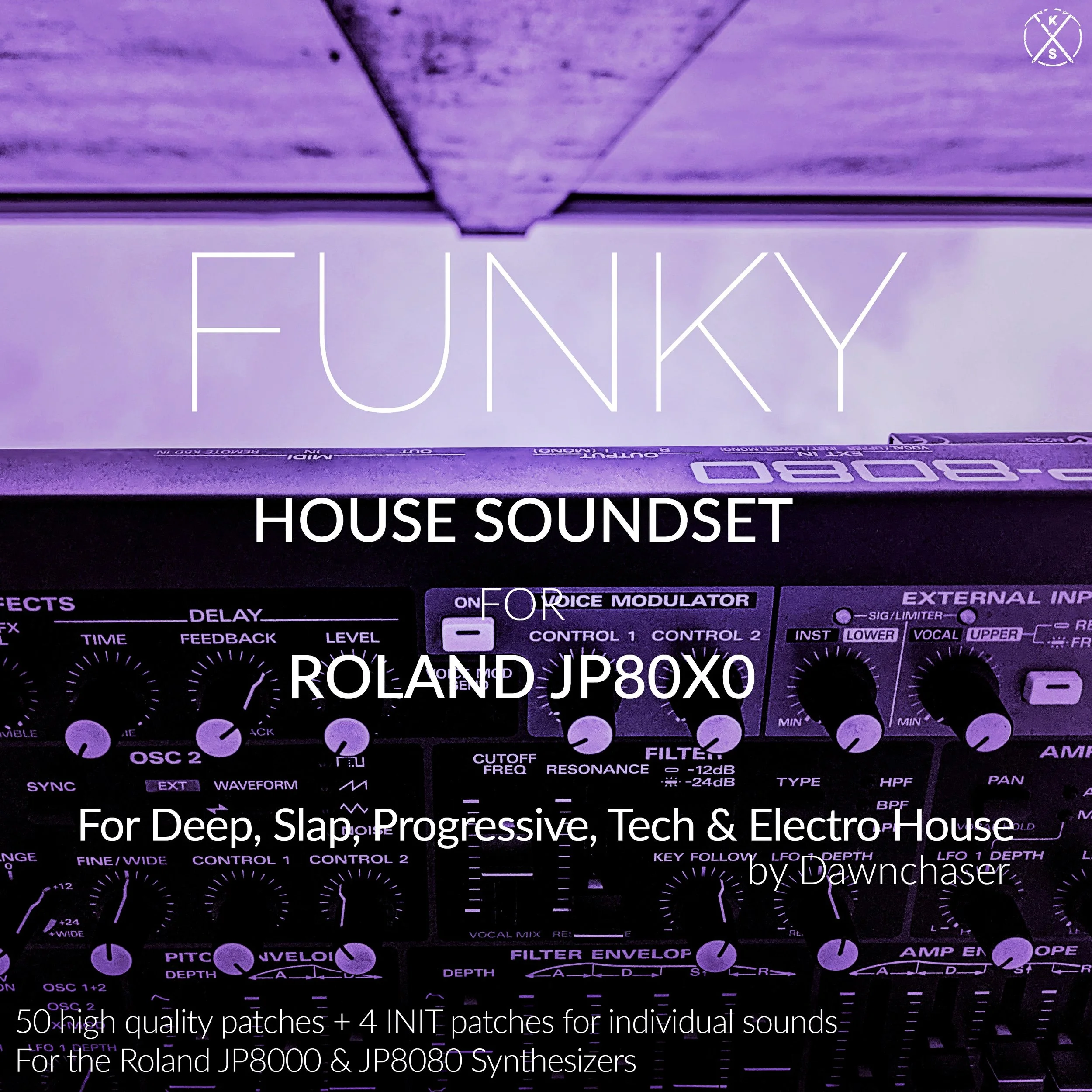
50 groovy House dual-layer performances, compatible with the Roland JP-8000 and JP-8080 hardware synths. This soundbank is 100% House-oriented, which means no weird pianos, FX, or brass sounds. The sounds in Funky come straight out of songs written using classic VA synths. So this soundset is designed to fully exploit the JP’s iconic SuperSaw oscillator, virtual analog character, and virtual analog sound engine to their fullest potential!
Performances in Funky are based on sounds from songs by the likes of Deadmau5, Tiesto, FISHER, Kygo, Robin Schulz, SOMMA, Sofi Tukker, Tony Igy, Hardwell, Blasterjaxx, Martin Garrix, Porter Robinson, Jewels, and many many more!
And to cap off the bank some slots were set to INIT, so you have room to write and store your own sounds without overwriting any existing presets!
Only 3rd party FX used in the demos was Virus TI2 reverb applied to some Leads, Pads, and Plucks.
Sounds in this pack are suitable for the Progressive House, Deep House, Tech House, Bigroom House, and Electro House genres, and are organized by category into Leads, Plucks, Pads, and Basses, for quick reference
All performances are royalty-free and delivered instantly via email as a 24-hour download link
Requirements: Roland JP-8000 or JP-8080 synthesizer
Also compatible with Adam Szabo Airwave, The Usual Suspects JE-8086, DiscoDSP Retromulator, DiscoDSP Corona VSTi using included .syx file, and Arturia Jup-8000 V VSTi using included split Performance files
“The preset banks by Kulshan Studios immediately brings out the very best of what the Roland JP-8080 has to offer.” - Armada Music Publishing
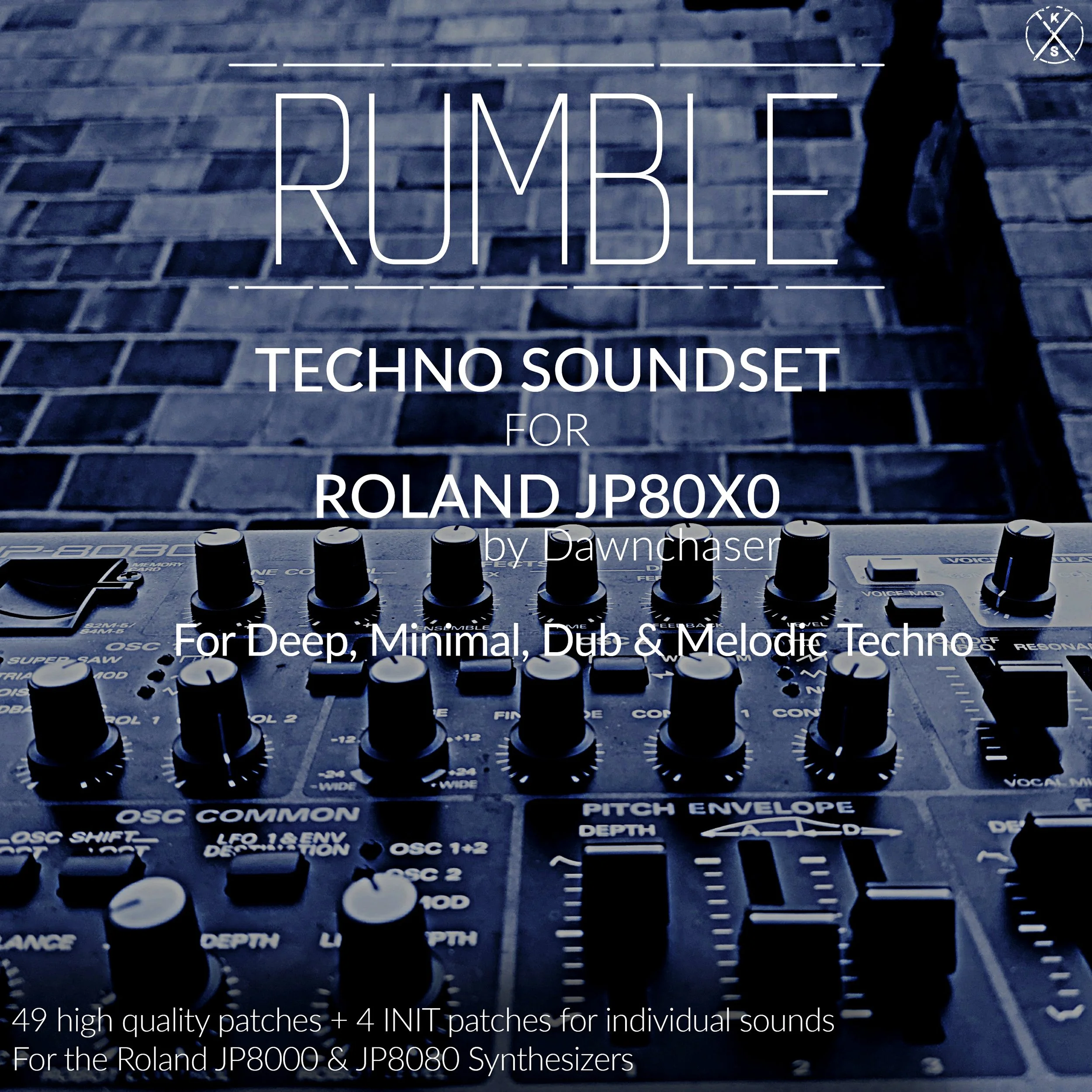
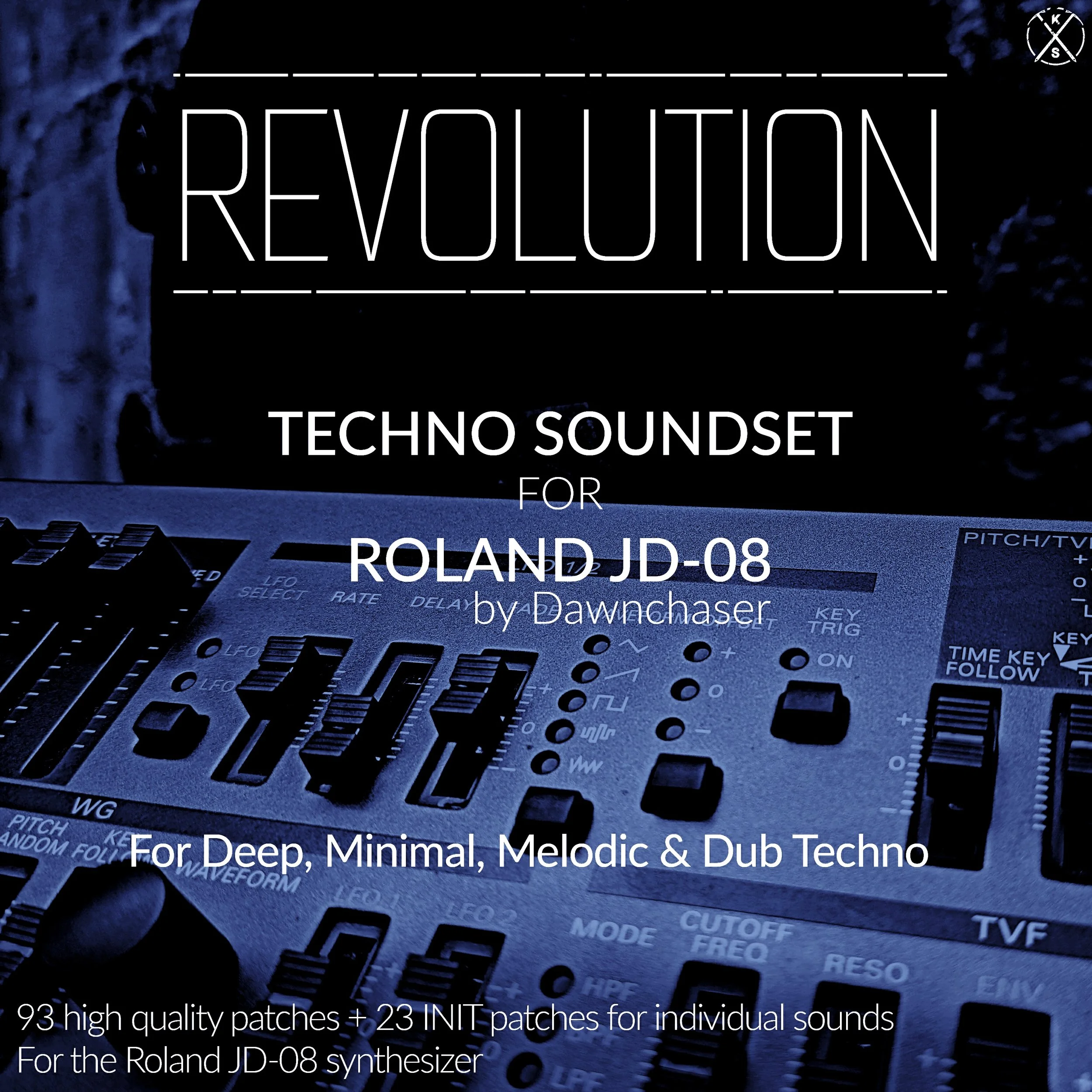
49 driving Techno dual-layer performances, compatible with the Roland JP-8000 and JP-8080 hardware synths. This soundbank is 100% Techno-oriented, which means no weird brass, pianos, or FX. Sounds in this pack were referenced against big tunes from the 2000s, 2010s, and 2020s. So this soundset is designed to fully exploit the JP’s virtual analog character, gritty distortion, and wild modulation capabilities to their fullest potential!
Performances in Rumble are based on sounds from songs by the likes of Boris Brejcha, Ann Clue, Tale Of Us, Argy & Goom Gum, KAS:ST, Adriatique, Garpo, Convextion, Dycide, and many many more!
And to cap off the bank some slots were set to INIT, so you have room to write and store your own sounds without overwriting any existing presets!
Only 3rd party FX used in this video was ValhallaRoom reverb, on the leads, pads, and plucks.
Sounds in this pack are suitable for the Melodic Techno, Deep Techno, Dub Techno, and Minimal Techno genres, and are organized by category into Leads, Plucks, Pads, Acid sounds, and Basses, for quick reference
All performances are royalty-free and delivered instantly via email as a 24-hour download link
Requirements: Roland JP-8000 or JP-8080 synthesizer
Also compatible with Adam Szabo Airwave, The Usual Suspects JE-8086, DiscoDSP Retromulator, DiscoDSP Corona VSTi using included .syx file, and Arturia Jup-8000 V VSTi using included split Performance files
“The preset banks by Kulshan Studios immediately brings out the very best of what the Roland JP-8080 has to offer.” - Armada Music Publishing
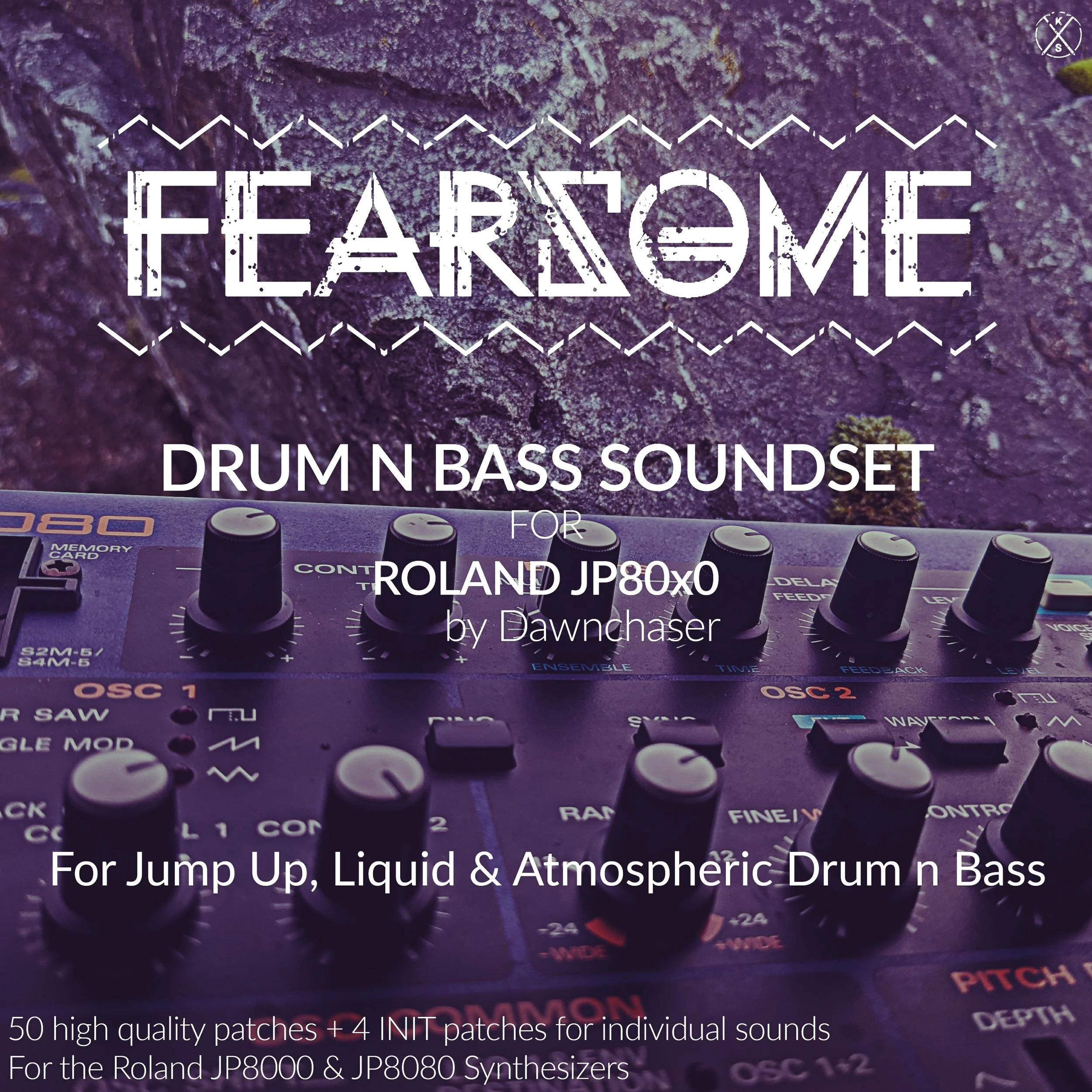
50 aggressive Drum n Bass dual-layer performances, compatible with the Roland JP-8000 and JP-8080 hardware synths. This soundbank is 100% DnB-oriented, which means no weird clangs, effects, or bells. The performances in Fearsome were referenced against big tunes of the 90s, 2000s, 2010s, and 2020s. So this soundset is designed to fully exploit the JP’s powerful X-Mod, gritty distortion, and virtual analog sound engine to their fullest potential!
These patches are based on sounds by the likes of Pendulum, Andy C, Sub Focus, Spor, Subrix, Messiah, Maduk, Wilkinson, Netsky, Maykors & Neekir, and many many more.
And to cap off the bank, some patches were set to INIT, so you have room to write and store your own patches without overwriting any existing sounds!
Only 3rd party FX used in these sounds was Virus TI2 reverb, on the leads, pads, and plucks.
Sounds in this preset pack are suitable for the Jump Up Drum n Bass, Liquid Drum n Bass, and Atmospheric Drum n Bass genres, and are organized by category into Leads, Plucks, Pads, and Basses, for quick reference
All performances are royalty-free and delivered instantly via email as a 24-hour download link
Requirements: Roland JP-8000 or JP-8080 synthesizer
Also compatible with Adam Szabo Airwave, The Usual Suspects JE-8086, DiscoDSP Retromulator, DiscoDSP Corona VSTi using included .syx file, and Arturia Jup-8000 V VSTi using included split Performance files
“The preset banks by Kulshan Studios immediately brings out the very best of what the Roland JP-8080 has to offer.” - Armada Music Publishing

50 gritty Industrial dual-layer performances, compatible with the Roland JP-8000 and JP-8080 hardware synths. This soundbank is 100% Industrial-oriented, which means no weird brass, pianos, or FX. The sounds in Rivet were referenced against classic and modern tunes of the 80s, 90s, 2000s, 2010s, and 2020s. So this soundset is designed to fully exploit the JP’s iconic SuperSaw oscillator, gritty distortion, Ring Mod, Cross-Mod, and virtual analog sound engine to their fullest potential!
Performances in Rivet are based on sounds by the likes of Rammstein, Deathstars, Combichrist, White Zombie, Motionless In White, OOMPH!, Faderhead, Studio-X, Front 242, Rob Zombie, Perturbator, Godflesh, Skinny Puppy, Grendel, Extinction Front, Noisuf-X and many many more.
And to cap off the bank some slots were set to INIT, so you have room to write and store your own sounds without overwriting any existing presets!
Only 3rd party FX used in the demo was Virus TI2 reverb, on the leads, pads, and plucks.
Sounds in this preset pack are suitable for the Industrial Rock, Industrial Metal, EBM, and Aggrotech genres, and are organized by category into Leads, Plucks, Pads, and Basses, for quick reference
All performances are royalty-free and delivered instantly via email as a 24-hour download link
Requirements: Roland JP-8000 or JP-8080 synthesizer
Also compatible with Adam Szabo Airwave, The Usual Suspects JE-8086, DiscoDSP Retromulator, DiscoDSP Corona VSTi using included .syx file, and Arturia Jup-8000 V VSTi using included split Performance files
“The preset banks by Kulshan Studios immediately brings out the very best of what the Roland JP-8080 has to offer.” - Armada Music Publishing
“If you’re into making music along the lines of Rob Zombie, Front 242, Skinny Puppy, Rammstein et al, then this bank is for you” - Rob Puricelli, GearNews

50 vintage Synthwave dual-layer performances, compatible with the Roland JP-8000 and JP-8080 hardware synths. This soundbank is 100% Synthwave and 80s-oriented, which means no weird pianos, FX, or Trance sounds. The sounds in Nightride come straight out of songs written using classic 80s analog and digital synths. So this soundset is designed to fully exploit the JP’s virtual analog oscillators, lush chorus, and wild modulation capabilities to their fullest potential!
Performances in Nightride are based on sounds from songs by the likes of The Midnight, Michael Jackson, Europe, Van Halen, Devo, Kraftwerk, Duran Duran, Bon Jovi, NiElsir, Vangelis, ED-209, Bananarama, The Pointer Sisters, Earth, Wind & Fire, and many many more!
And to cap off the bank some slots were set to INIT, so you have room to write and store your own sounds without overwriting any existing presets!
Only 3rd party FX used in this video was ValhallaRoom reverb, on the leads, pads, and plucks.
Sounds in this pack are suitable for the Synthwave, Italodisco, New Wave, and 80s genres, and are organized by category into Leads, Plucks, Pads, and Basses, for quick reference
All performances are royalty-free and delivered instantly via email as a 24-hour download link
Requirements: Roland JP-8000 or JP-8080 synthesizer
Also compatible with Adam Szabo Airwave, The Usual Suspects JE-8086, DiscoDSP Retromulator, DiscoDSP Corona VSTi using included .syx file, and Arturia Jup-8000 V VSTi using included split Performance files
“The preset banks by Kulshan Studios immediately brings out the very best of what the Roland JP-8080 has to offer.” - Armada Music Publishing
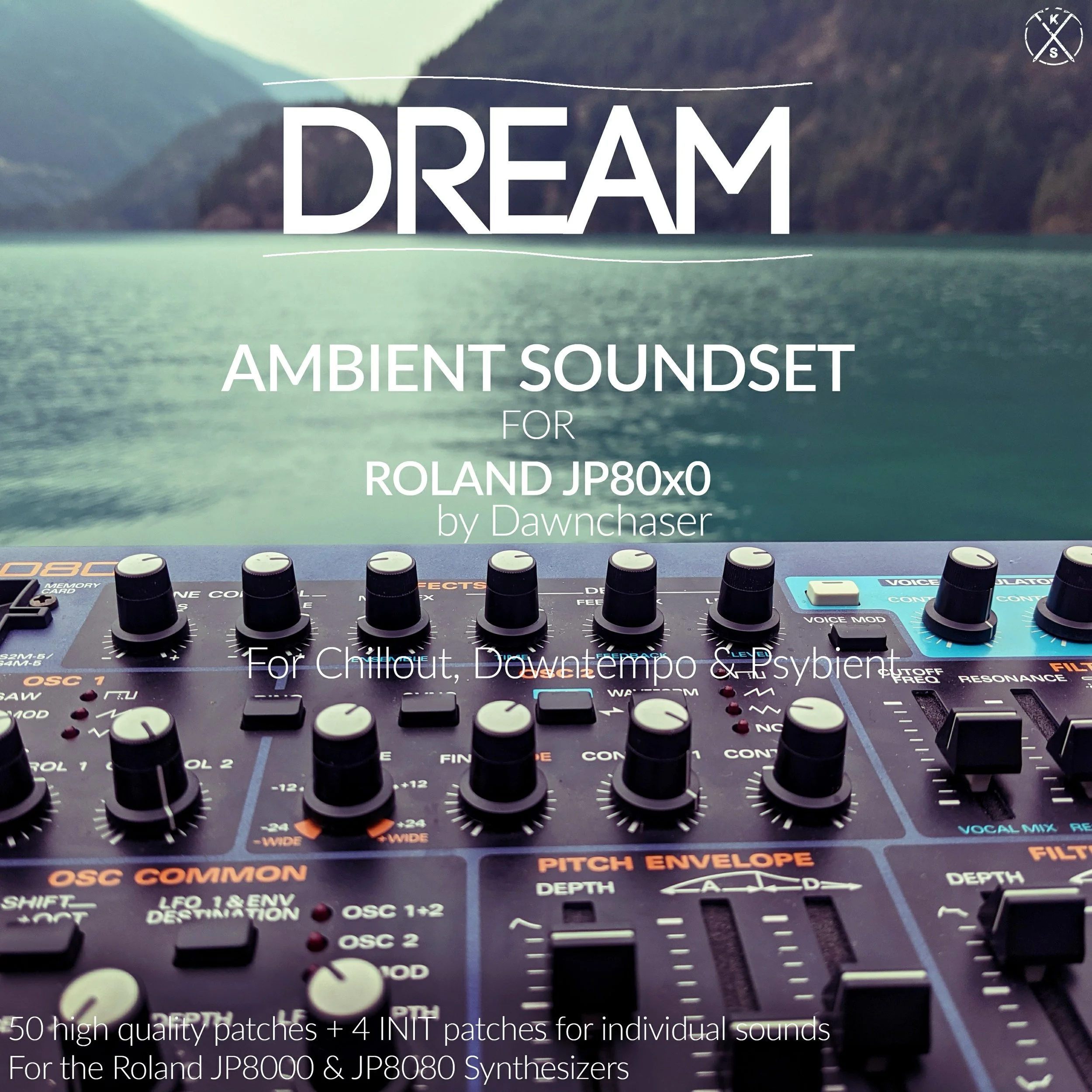
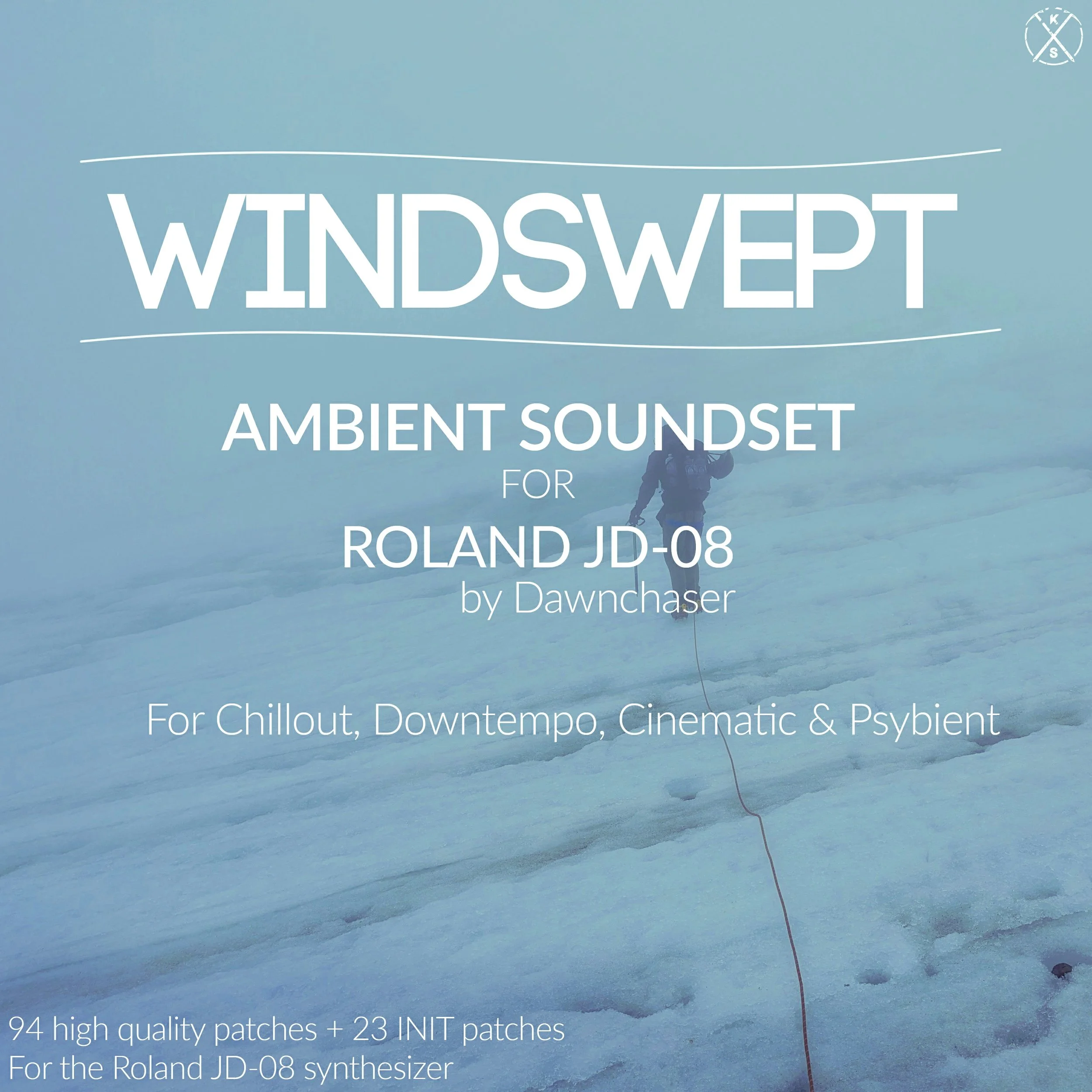
50 lush Ambient and Downtempo dual-layer performances, compatible with the Roland JP-8000 and JP-8080 hardware synths. This soundbank is 100% Ambient-oriented, which means no weird or unnecessary sounds. Performances in this pack are based on sounds from the biggest chill tunes of the 70s, 80s, 90s, 2000s, 2010s, and 2020s. So this soundset is designed to fully exploit the JP’s warbly LFOs, dreamy effects, and virtual analog sound engine to their fullest potential!
Performances in Dream are based on sounds from artists including Boards Of Canada, Nightmares On Wax, All India Radio, The Orb, Trentemøller, Shpongle, Brian Eno, Tangerine Dream, Dawnchaser, Angelo Badalamenti, Amiranu, Tangerine Dream, and many more!
And to cap off the bank some performances were set to INIT, so you have room to write and store your own sounds without overwriting any existing sounds!
Only 3rd party FX used in the demo was Virus TI2 reverb applied to some Leads, Pads, and Plucks.
Sounds in this pack are suitable for the Ambient, Chillout, Downtempo, Psybient, and Cinematic Soundscape genres, and are organized by category into Leads, Plucks, Pads, and Basses, for quick reference
All performances are royalty-free and delivered instantly via email as a 24-hour download link
Requirements: Roland JP-8000 or JP-8080 synthesizer
Also compatible with Adam Szabo Airwave, The Usual Suspects JE-8086, DiscoDSP Retromulator, DiscoDSP Corona VSTi using included .syx file, and Arturia Jup-8000 V VSTi using included split Performance files
“The preset banks by Kulshan Studios immediately brings out the very best of what the Roland JP-8080 has to offer.” - Armada Music Publishing
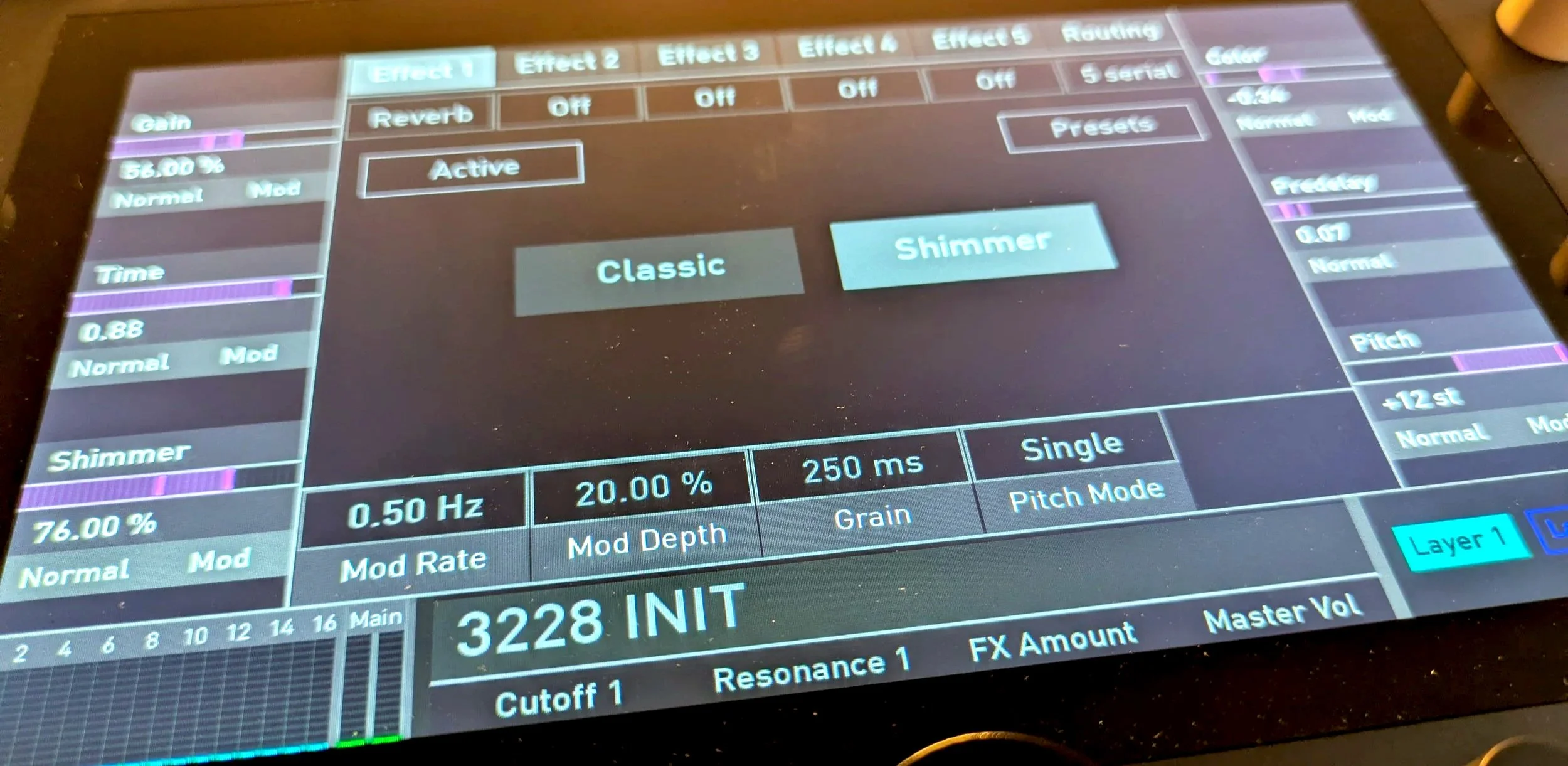
















$118.00 (MSRP $162.00 if purchased individually - Save $44 / 27%).
Unlock the ultimate high-energy mainstage collection for your JP with the definitive library for the king of hardware SuperSaw synths. The Kulshan Studios Ultimate Roland JP-8000 & JP-8080 Trance Anthology brings together all six Altitude soundsets, delivering 300 soaring leads, dreamy plucks, rolling basses, and majestic pads, all ready to drop into your next anthem.
Whether you are producing peak-time uplifting trance, classic 2000s club anthems, euphoric hard trance, or modern progressive tracks, this complete collection transforms your JP into an endlessly versatile dance music powerhouse. Every single patch leverages the signature virtual analog engine, utilizing dual-performance layers for added depth, complex modulations, and the legendary built-in multi-effects.
Key Features:
Total Presets: 300 handcrafted Performance patches organized across 6 individual soundbanks (50 patches per bank).
Hardware & Plugin Compatibility: 100% compatible with the hardware Roland JP-8000 keyboard and Roland JP-8080 rack module. Fully compatible with software emulations including The Usual Suspects JE-8086, discoDSP Corona, Adam Szabo Airwave, and Arturia Jup 8000-V.
Zero Filler: Every soundbank is strictly genre-focused. No random clangs, useless sound effects, or out-of-place filler patches.
What's Included:
Altitude Trance Soundset: Pure, classic SuperSaw leads, uplifting plucks, majestic pads, and rolling trance basslines.
Altitude 2 Trance Soundset: Expansive stadium leads, soaring pads, and punchy basses and plucks.
Altitude 3 Trance Soundset: Driving leads, razor-sharp plucks, and deep bass patches.
Altitude 4 Trance Soundset: High-octane euphoric leads, 303-style acid sounds, and lush atmospheric pads.
Altitude 5 Trance Soundset: Modern mainstage trance arp leads, punchy plucks, and anthemic pads.
Altitude 6 Trance Soundset: The pinnacle of the series. Massive SuperSaws leads and pads, dirty FM bass tones, and peaktime prog plucks.
What You Get:
All patches in standard .pfm / .syx / .mid / .artx format, sorted into their specific bank folders inside a single bulk .zip file.
Why Grab The Ultimate Trance Anthology?
Purchasing these 6 trance banks individually at $27 adds up to $162. The Kulshan Studios Ultimate Roland JP-8000 & JP-8080 Trance Anthology gives you instant access to Kulshan Studios' complete archive of world-class trance soundsets, as featured in Armada Music Publishing's in-house production studios, at a 27% discount, ensuring you have the exact right hardware patch ready the moment inspiration strikes in the studio.
(Note: This is a digital download containing SysEx / MIDI / PFM / ARTX patch files. Loadable via standard MIDI librarian software, hardware SysEx dumps, WinJPLib, or compatible VST emulations).
~ All bundles are excluded from additional discount codes and sales.
“The preset banks by Kulshan Studios immediately brings out the very best of what the Roland JP-8080 has to offer. A must have for any trance producer with one of these legendary synthesizers.” - Armada Music Publishing