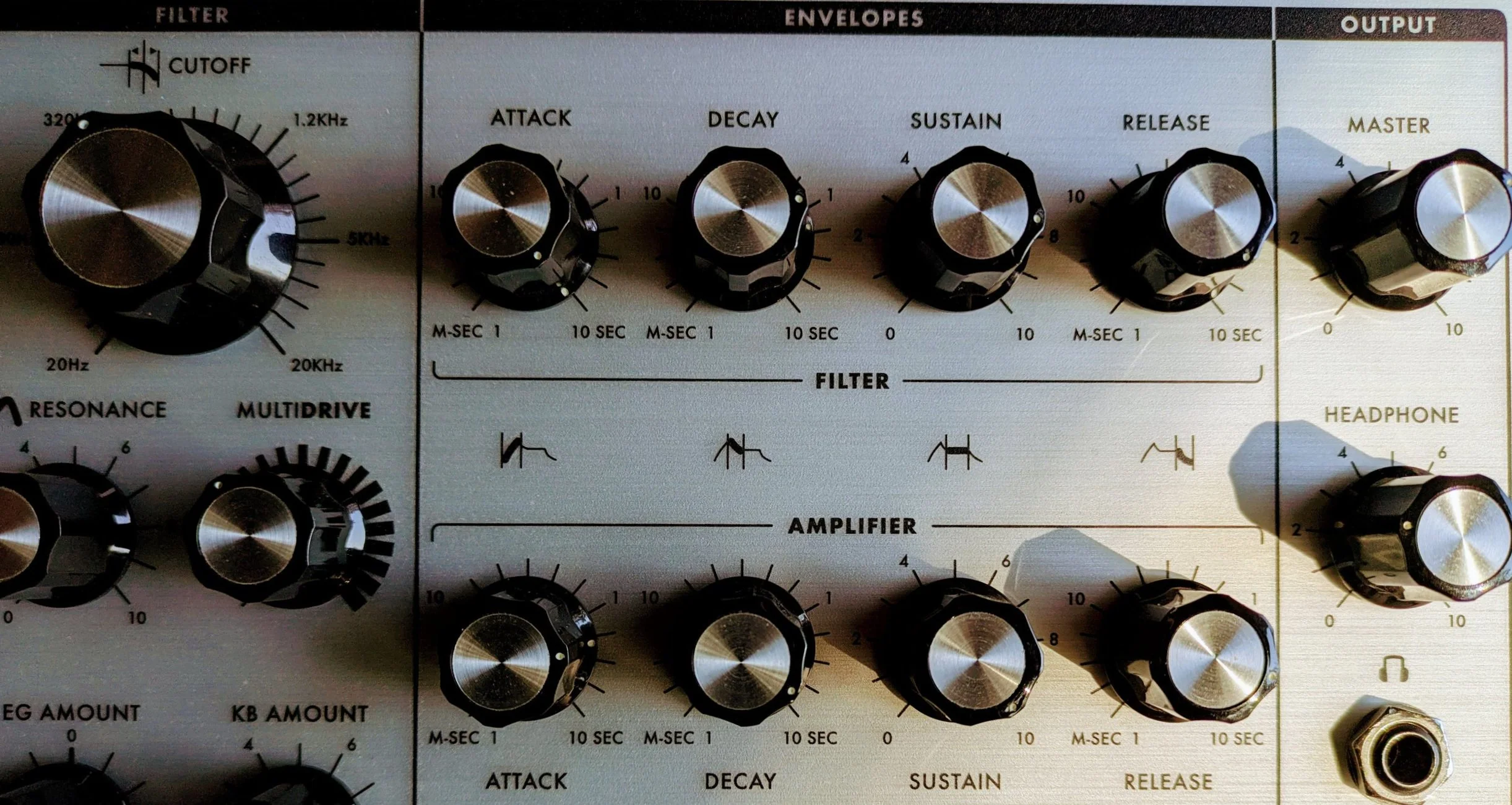
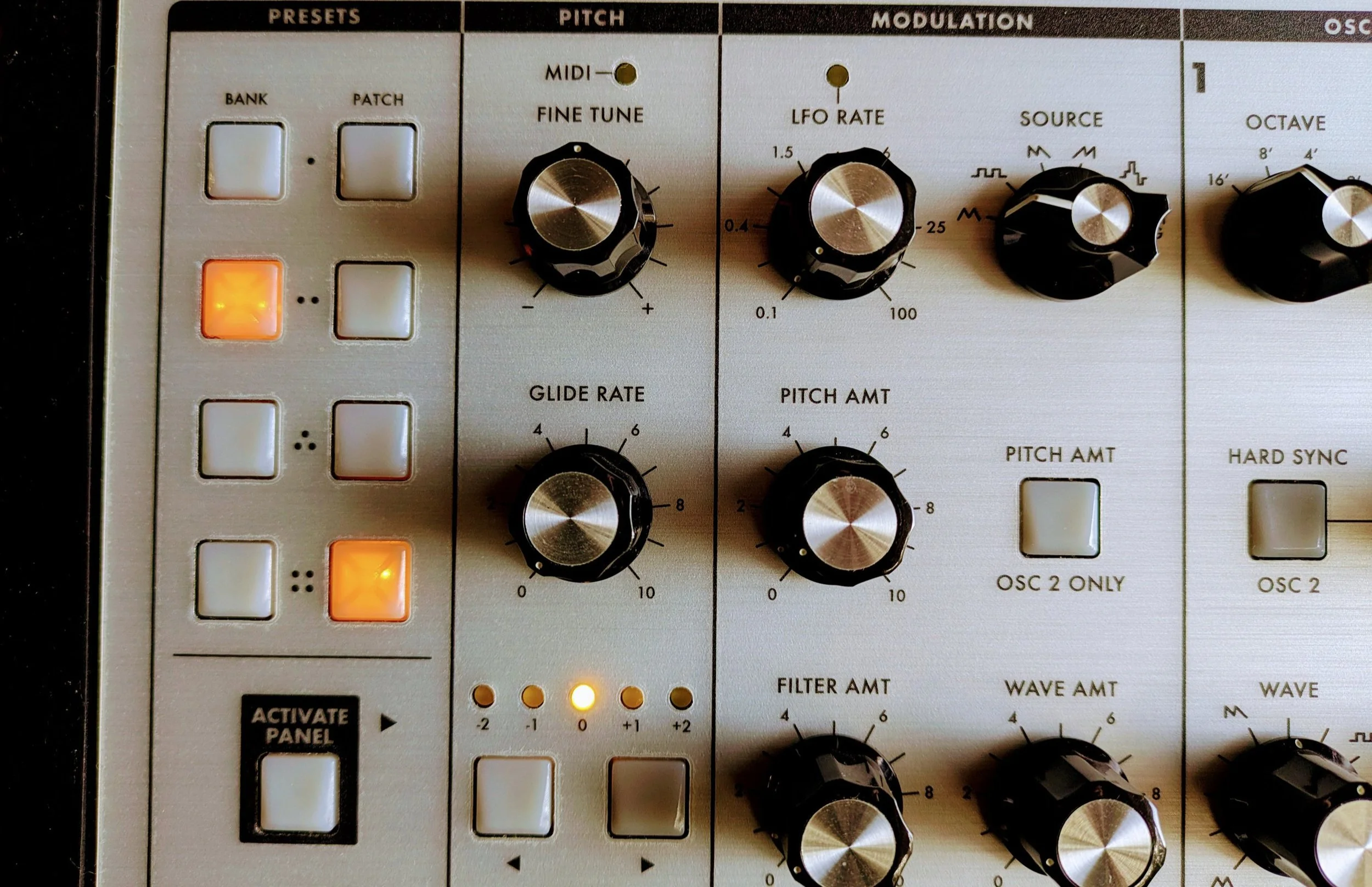
The first thing you’ll hear, are the oscillators. There’s 2 main oscillators, plus a Sub Osc that is permanently set to Square, and plays 1 octave below Osc 1, and a Pink Noise generator.
Compared to the Slim Phatty, the Sub Phatty raw oscillator tone is aggressive and in your face. Where the Slim Phatty has a smoother rounder tone (partly due to the lower cutoff point for the filter, and also because of the chips used for the VCOs) suitable for vintage 70s and 80s sounds, the Sub Phatty is brighter and dirtier and punches through in a mix more noticeably. It’s not brassy like the Prophet Rev2, but much more aggressive than the Slim. You can hear a full Moog Synth Comparison of the Sub Phatty vs the Slim Phatty and the Sub37 here.
The 2 main Oscs have full wave sweep capabilities, ranging from pure Triangle wave all the way to narrow Pulse, in a continuous function. It’s quite nice for creating some very exotic dirty electro basses and Psytrance noises.
The Osc Sync function is interesting, although it doesn’t feel like it can penetrate the same territory as the Slim Phatty’s Osc Sync. The Slim’s Sync can veer into full on FM territory with a little coaxing, and DX7 style sounds can be managed on it, whereas the Sub Phatty’s sync never quite achieves the same variety of metallic and hollow sounds.
The Pink Noise generator is helpful for some classes of sounds - the manual states producers like to use it for Percussion sounds. But for modern Techno, House, and Trance producers, Pink Noise is much less useful for modern sound design, since the low frequencies tend to crowd out the rest of the sound and mess with the tone balance. Pure White Noise or some kind of sweepable Noise generator that allows for Pink and White Noise would have been much more useful for making modern Melodic Techno and Progressive Trance sounds.
The 2 layers of Detune capabilities for the Sub Phatty are a welcome touch though, as the single Freq knob on the Slim Phatty makes it very difficult to create detuned Trance and Psytrance saw leads without veering off into uncontrolled tuning territory. Being able to detune very slightly on the main Frequency knob and then adjust the secondary knob a tiny to taste makes it easy to make usable sounds very quickly.
It’s worth noting that pushing the Oscs too loud starts to overdrive them, so factor that into your sound design choices when working with it. A delicate approach is needed when trying to make smooth and gentle sounds with these oscillators.