Kulshan Studios

The Definitive Source For 170+ Professional Synthesizer Presets & MIDI Packs for Trance, Techno, House, Ambient, Dubstep, Psytrance, Hardcore, Drum n Bass, Hardstyle, Hiphop, Rock, Metal, Synthwave, Pop, Jazz. Funk, Folk, & Industrial Producers

Sample & MIDI packs, tutorials, and presets for analog, virtual analog, and software synthesizers

Filtering by Tag: analog synthesizer

Do Analog Synths Belong In Trance Music?

When folks jump on Facebook or Reddit to ask about the best synths to use for Trance, it often seems like there’s only 3 or 4 names that ever come up. Spire. Sylenth1. Virus TI (or OsTIrus, now). JP-8000 (or JE-8086, as of December 2025). The occasional mention of Diva. Lots of digital polyphonic VST plugins with some version of a SuperSaw baked into the architecture somewhere in the signal path.

And following that same thread, an almost equal number of Trance fans (especially the older ones) complain that everything sounds the same, and the life has gone out of modern Trance. While I fundamentally disagree with that premise, I do think there is something to the idea that Sameness has taken over the sound. Some folks would say the genre has become trapped in its own tropes and experimentation and deviation from the standard SuperSaws & Arpeggios ends in apathy or punishment from the scene, but I also don’t agree with that premise.

A lot of great tunes from the 90s on to the mid-2010s did not use those sounds, or they weren’t the primary focus, and those sounds had a lot of character.

And with the massive explosion in interest of analog synths that has happened since the 2010s, I think now is the perfect time for Trance artists to veer away from the typical SuperSaw sound, and start incorporating a little analog character and unpredictability into their mixes.

It’s true that most Trance producers avoid Analog synths. Many are monophonic, and the ones that aren’t, tend to be expensive, and have limited polyphony compared to their plugin cousins.

But there are still many places where Analog synths can serve useful secondary, and even central roles in big Trance anthems.

Where Analog Fits In The Mix

The most obvious example is what most folks associate Analog synths with… bassline duties. And Analog is great for basslines. Sometimes too great.

Take for example, these 2 songs. On Heaven, Wavetraxx and I used the Prophet Rev2 for a midrange bass layer, to add extra character to the low end. The rest of the song is digital, but DCO Analog sound still occupies a supporting role in the mix, and lends the character extra depth. The bass sound didn’t get used for the entire sub + midrange layer because the saturation baked into the sound was too heavy for the mix, and without lopassing to cut the lows and some lo-mids out of the sound, it would have clashed with the kick. But hipassed and notched tastefully, it sat tidily on top of the sub bass, and added an extra dimension to the music that makes it feel more organic.

Midrange Bass: Sequential Prophet Rev2

And below in Cascade Highway, the Prophet Rev2 is fully on bassline duties, in both the sub bass and the midrange bass. I used the Virus TI2’s Rate Reducer FX to give the midbass a kind of ‘talking’ evolving character. But the weight and punchiness of the DCO Analog sound in the lows (with added Osc Slop to the oscillator tuning to add classic analog behavior flavor) gives the tune a round warm character. And the nice part of the Prophet is its Panning capabilities, making it possible to create bouncing midrange basses that widen the song without needing any special technical tricks.

Sub Bass & Midrange Bass: Sequential Prophet Rev2

Lead The WaY

But for less obvious uses, Analog synths work great for Trance Leads. As you can hear in the playlist below, most of the synths use some forms of Pulse and Sawtooth waves, with some added FX to liven them up. Except for Empire of Hearts, every other song uses sounds that can easily be made on any analog synth with 1-2 LFOs and some basic Pulse Width and Pitch modulation capabilities (which is basically all of them). The Empire of Hearts lead could be made on any analog synth with 3 or more voices, and anything with a sub oscillator alongside 2 regular oscillators. The songs in the demos (we think, anyway) mostly use VA synths like the Virus, or Supernova or Q. But the waves the sounds are based on can be found on everything from a classic Minimoog to a Sequential Fourm or OB-6.

Indeed, modern analogs like the Prophet Rev2, Teo-5, Fourm, OB-6, and OB-X8 can even do quasi-SuperSaws, with the Teo-5 and Fourm sounding the best of the bunch (according to our Superbooth 2026 live tests). You can make digital-style sounds on Analog synths very capably, and in the case of the Teo-5, sound even better than the original sound you were trying to mimic.

More Than Meets The Ear

There is a lot of underutilized Trance potential in the many Moog, Sequential, Oberheim, Korg, Arturia, Behringer, and countless boutique Analog synths made by smaller companies, just waiting to be tapped into. With little more than a couple octave-spread square waves, a fast LFO on the pitch at a low setting, and a touch of white noise, you can make a buzzy biting lead synth straight out of late 2000s epic and progressive trance that would cut through any modern mix and add a certain je ne sais quoi to your music that listeners may not know is specifically analog, but will recognize as unique and pleasing, and subtly set you apart from everyone else.

Get Plucky

The same logic applies to plucks as well. Mono synths can be tricky for plucks, but if you’re willing to write riffs that are not just racing 16th note arpeggios with the notes all clustered together, or big stacked chords, you can make an analog mono synth sound every bit as big and majestic in a mix as any Virus or Diva pluck. And small touches like pitch drift, or analog filter variations in VCO synths lend a more organic quality to the sound that will feel more natural, without the need to apply special settings in a plugin to achieve it. And with Moogs, their baked-in low-mid saturation makes upper register plucks sound super round and rich.

Opening pluck: PL Skylark (from Skylarking by BT)

Although Analog poly synths sound very rich for plucks too. The Prophets all have their own individual character, and because they’re all polyphonic to different degrees, you can play some super nice epic chords with them. Some synths lend themselves better to warmer gentler sounds, others to brighter snappier sounds, but synths like the Rev2 can handle both very nicely (although it tends more toward bright by default).

Pluck: PL Everytime (from Everytime You Need Me by Fragma ft Maria Rubia)

And because every synth manufacturer uses different parts for their gear, sometimes even different parts between different synths in their inventory, even things as basic as Square and Saw waves don’t sound alike between instruments.

The timbral differences between different Moogs

So if every producer is using different instruments, be they budget or flagship, they will all sound subtly different from one another, and Trance will gradually begin to regain its lost feeling of variety. There have been a growing number of artists doing this, Giuseppe Ottaviani being one of the most notable examples, and it shows in his music. Arguments that folks can’t hear the difference in a mix are missing the point. It’s not that they’re hearing Analog specifically. What they’re hearing are variations in tone, timbre, and the differences in workflows that guide the production and mixing decisions for each artist, based on their instrument choices. When everyone is using the same easily-pirated VST plugins, everyone starts from the exact same place, and room for variation is narrower.

When everyone starts from different places, even when they’re all making the same genres, they’re all going to sound a little different.


Thanks to companies like Behringer making full on budget gear, Korg making mid-priced synths like the Minilogue and Monologue (and even the oft-ignored Prologue) and companies like Sequential creating entry-level analog poly synths (to say nothing of their older discontinued units like the Mopho and the Tetra), and discontinued Moog synths like the Slim Phatty and Subsequent 25 commanding more reasonable prices than the super expensive new gear on the market, there has never been a better time to explore all the options out there and start incorporating less-conventional synths and synth sounds into Trance.

So, Do Analog Synths Belong In Trance?

Absolutely. Does everyone need the most expensive, feature-loaded piece of flagship kit from the biggest prestige manufacturers? No. Will an Analog synth magically make your music world-class the moment you turn it on? Again, no.

But like with most anything else, if you know what you want your music to sound like, and you understand some basics about sound design and music composition, you can turn even the most basic and cheap analog module into the centerpiece of your next monster Luminosity anthem. It’s like Murderface says in Metalocalypse: “It’s a very dangerous weapon to know what you’re doing”.

And in a world where every Uplifting Trance 2026 Mix sounds like the same 3 Spire SuperSaw presets, we all owe it to our listeners to do something different, even if it’s so subtle they might not notice it immediately. The music world’s homogenized a lot in the last decade. Let’s mix things up a little.
Moog Sub37 Review 2025

Smooth. Fat. Overdriven. Powerful. Just a few words that get bandied about when talking about the Moog Sub 37. Released in 2014, it was one of their most feature-laden synths to-date. How does it hold up in 2025? Does it live up to the hype? Is it still worth getting now? Let’s dive in and find out.


OSCILLATORS

As is typical for post-millennium Moogs, the Sub37 comes with 2 standard oscillators with octave switches and fully-sweepable wave knobs, which can yield some extremely exciting possibilities. Alongside the 2 normal Oscs, it also sports a Sub oscillator (which is just a Square wave tuned 1 octave below Osc 1), and a Pink Noise generator.

The oscillators are brighter than the Slim Phatty, but not quite as aggressive as the Sub Phatty. They definitely sound more ‘modern’ than the Slim Phatty, and not quite as classically-Moogy as the Slim/Little Phatty or earlier Moogs. We did a whole video comparing several Moogs against one another you can watch here.

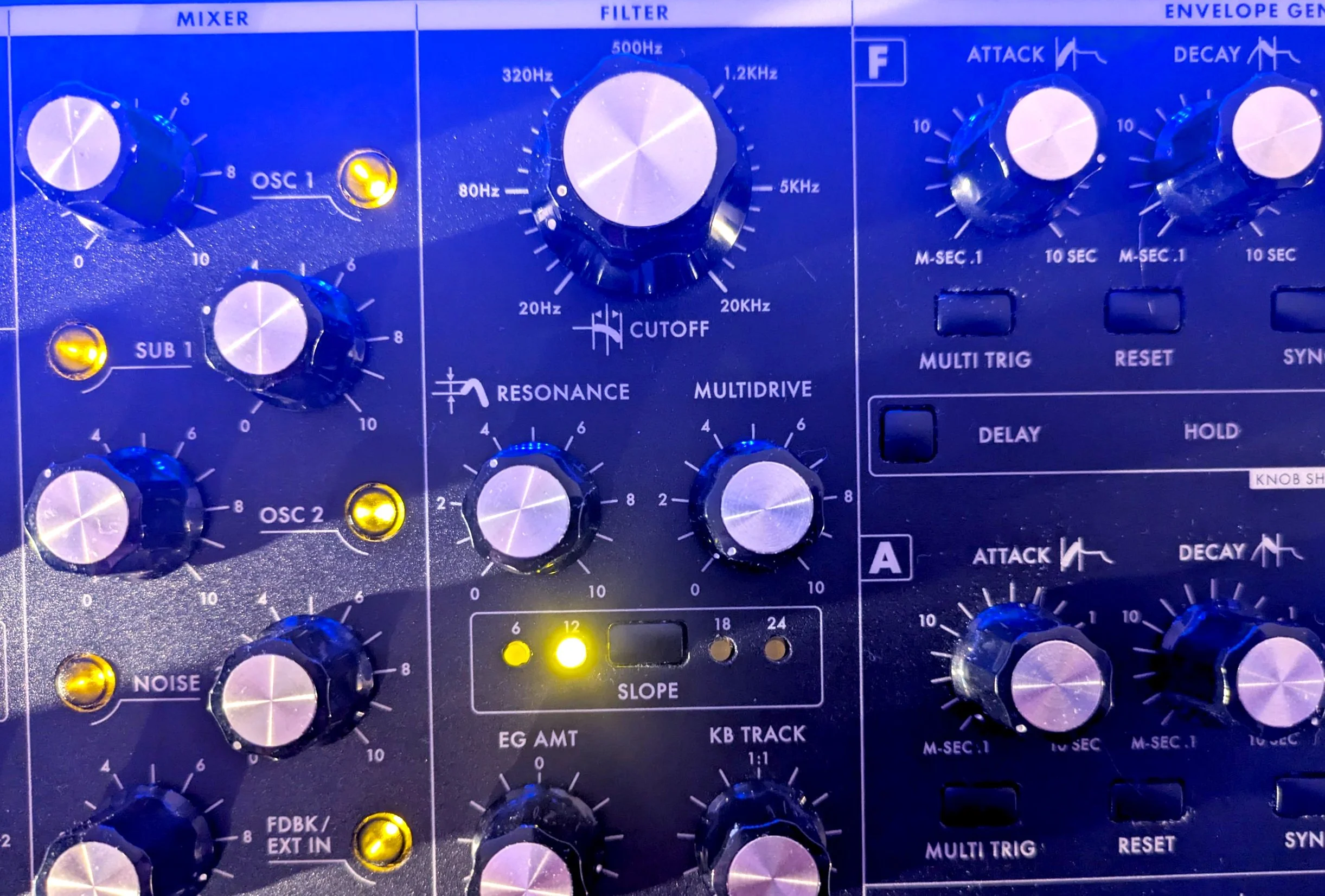
Past the 7:00 position on the Mixer gain dials, the Oscillators start to overdrive, which can yield some pleasingly gnarly tones when combined with the Feedback and Multidrive, but can make creating smoother gentler sounds a bit more challenging. You have to be especially mindful of this when trying to use pure Sawtooth waves in your sounds, as pushing them too hard starts to clip them and turn them into Square waves. The headroom on the Oscs was expanded for the Subsequent37, so this section doesn’t apply to that model.

Like with the Sub Phatty, the Pink Noise generator is a nice extra, but would have been better-implemented as a White Noise generator, to make it easier to use in modern Techno and Trance and House sounds. The low end on the Pink Noise overwhelms sounds a bit too easily and interferes with tonal balance on upper-register sounds.

What’s nice though, like with the Sub Phatty (and much easier to manipulate on the 37), is the ability to detune Osc 2 from Osc 1, with more granular controls for the detuning, via the Beat Freq knob, so you can achieve some nice Reese basses or detuned hard trance lead sounds.

The PWM on this is really nice, and being able to fully sweep the waves independently with each LFO yields some very cool sounds.

And one mode that is super nice, is Duo Mode. With that enabled, you can play paraphonic 2-note chords, which is a lot of fun.


FILTERS

That’s the other feature everyone is always most interested in when it comes to Moogs. And for this one, it yields some interesting surprises. The filter slopes are conveniently changeable from the front panel, so no obtuse button-diving like on the Sub Phatty.

And the maximum frequency cutoff for the Sub37 goes noticeably higher than on the Slim/Little Phatty, so it gets brighter and sharper than the older Moogs. That added brightness does pull away some of the attention from the saturated low-mids older Moogs were known for, but being a bit sharper and brighter here makes it much more useful in modern mixes.

Sizzling leads, snappy plucks, and gritty basses really shine on this synth, and the resonance can push sounds into some nice extreme territory.

Overall the filter still sweeps and behaves smoothly like a Moog filter should, albeit the higher cutoff makes sounds a bit brighter and harsher than they would be on an older Phatty. But using it in 4 pole filter slope mode mitigates that.


ENVELOPES

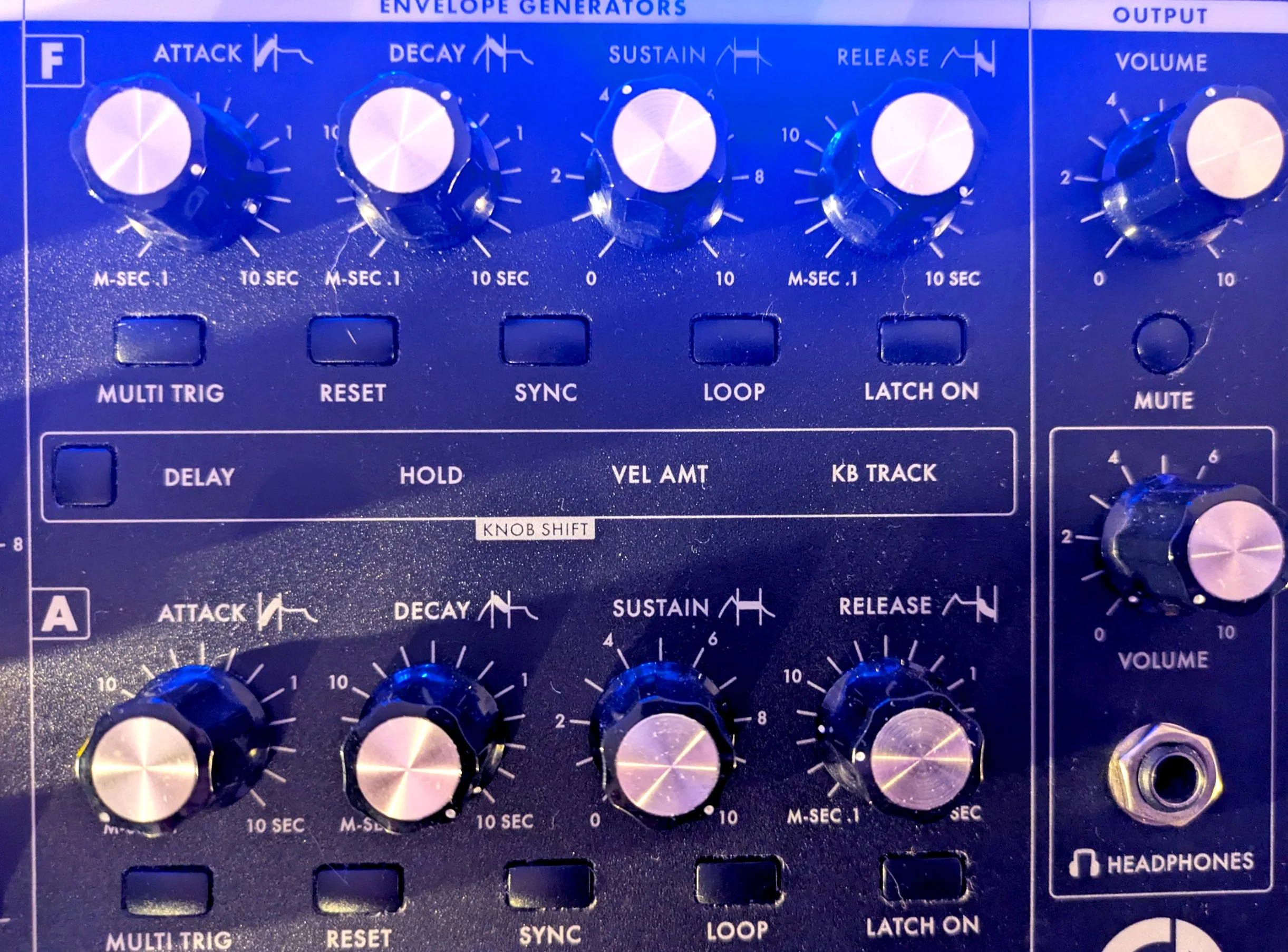
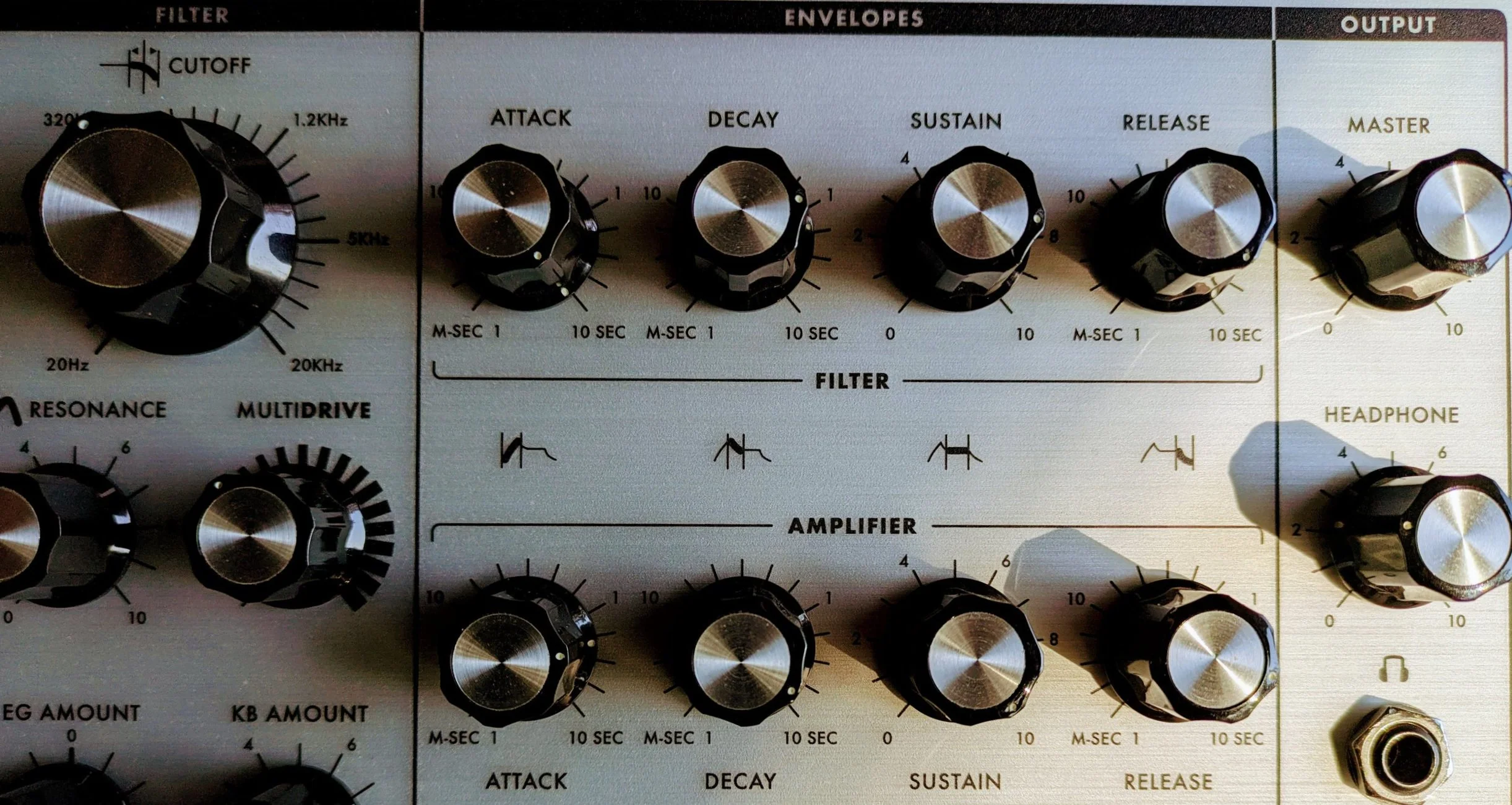
This is another area where the Sub37 pulls away from all its predecessors. At face value it looks like just a standard ADSR. But those 2 buttons, Delay and Hold, turn these Envelopes into DAHDSR, and can be set to be triggered, synced, and looped, opening up whole new worlds of sound sculpting possibilities.

The behavior is pretty standard otherwise.


LFO

Now things get really interesting. 2 LFOs that can be MIDI and clock synced? And with more routing options than other past Moogs? You better believe it. And they can go into Audio Rate territory, which is super cool.


MODULATION

What makes this really surpass the Sub Phatty that we reviewed earlier, is that there are independent Mod controls for Pitch and Filter, and for many other parameters, and the knobs are +/- at 12:00 as a starting point, so you can set negative values for different sweeps and modulations. LFO 2 works all the time any time, but LFO 1 is linked to the Modwheel. So you either need to keep the modwheel on the keyboard turned up all the time while using the front panel, or set the modwheel to Up while using the VST editor, and keep it up when saving the patches, if you want to modulate sounds with more complexity.

For added fun, hold the Mod 2 button and turn any knob, to automatically route Mod 2 to that parameter!


EFFECTS

Like with all the Moogs that came out before 2018, this is barebones on effects. One thing it does include that is super nice, are independent Feedback and Multidrive controls. Feedback is just a dedicated control implementation of the old Minimoog Model D trick of routing the audio output from the filter back into the mixer, which yields some crazy distortion when you start pushing it. And the Multidrive is nice for everything from gentle saturation to heavy crunchy distortion. You won’t find any other effects on this synth, but that’s not generally what folks get Moogs for in the first place.

End result can be anything from dark crunchy sounds to screaming wailing shrieks… and every flavor of gnarly 303 style Acid sounds in between.


CONCLUSION

At the end of all this, is the Sub37 still worthit in 2025?

I would say, yes. For the modern Trance/Psytrance/Chillout producer, this synth is much more versatile than the Little Phatty or Sub Phatty, and it can be as gentle or as aggressive as you want, with minimal effort.

Its tone might not suit someone on the hunt for a truly Classic Moog Sound, but for a modern analog duo/mono synth, this fares very nicely. The Subsequent37 adds a couple nice extras, including more headroom for the Oscillators at the Mixer stage, but that shouldn’t be a dealbreaker for you.

If you can find this for a good deal, you will enjoy this keyboard a lot.

Dawnchaser is a Pacific Northwest-based electronic music producer, mountaineer, documenter of all things adventure, mountain, and travel-related, and manager of Kulshan Recordings. If he’s not in the studio writing music about adventures, he’s out on one.


Moog Sub Phatty Review 2025

Aggressive. Grungy. Sterile? There are a lot of very interesting opinions about the Sub Phatty out there, and only a few of them overlap. Released in 2013, it was the beginning of the Sub series of synths from Moog, and it marked a shift in tone for Moog synths for a while. So how does it stack up in 2025? Is it worth getting today? Let’s dive in.

OSCILLATORS

The first thing you’ll hear, are the oscillators. There’s 2 main oscillators, plus a Sub Osc that is permanently set to Square, and plays 1 octave below Osc 1, and a Pink Noise generator.

Compared to the Slim Phatty, the Sub Phatty raw oscillator tone is aggressive and in your face. Where the Slim Phatty has a smoother rounder tone (partly due to the lower cutoff point for the filter, and also because of the chips used for the VCOs) suitable for vintage 70s and 80s sounds, the Sub Phatty is brighter and dirtier and punches through in a mix more noticeably. It’s not brassy like the Prophet Rev2, but much more aggressive than the Slim. You can hear a full Moog Synth Comparison of the Sub Phatty vs the Slim Phatty and the Sub37 here.
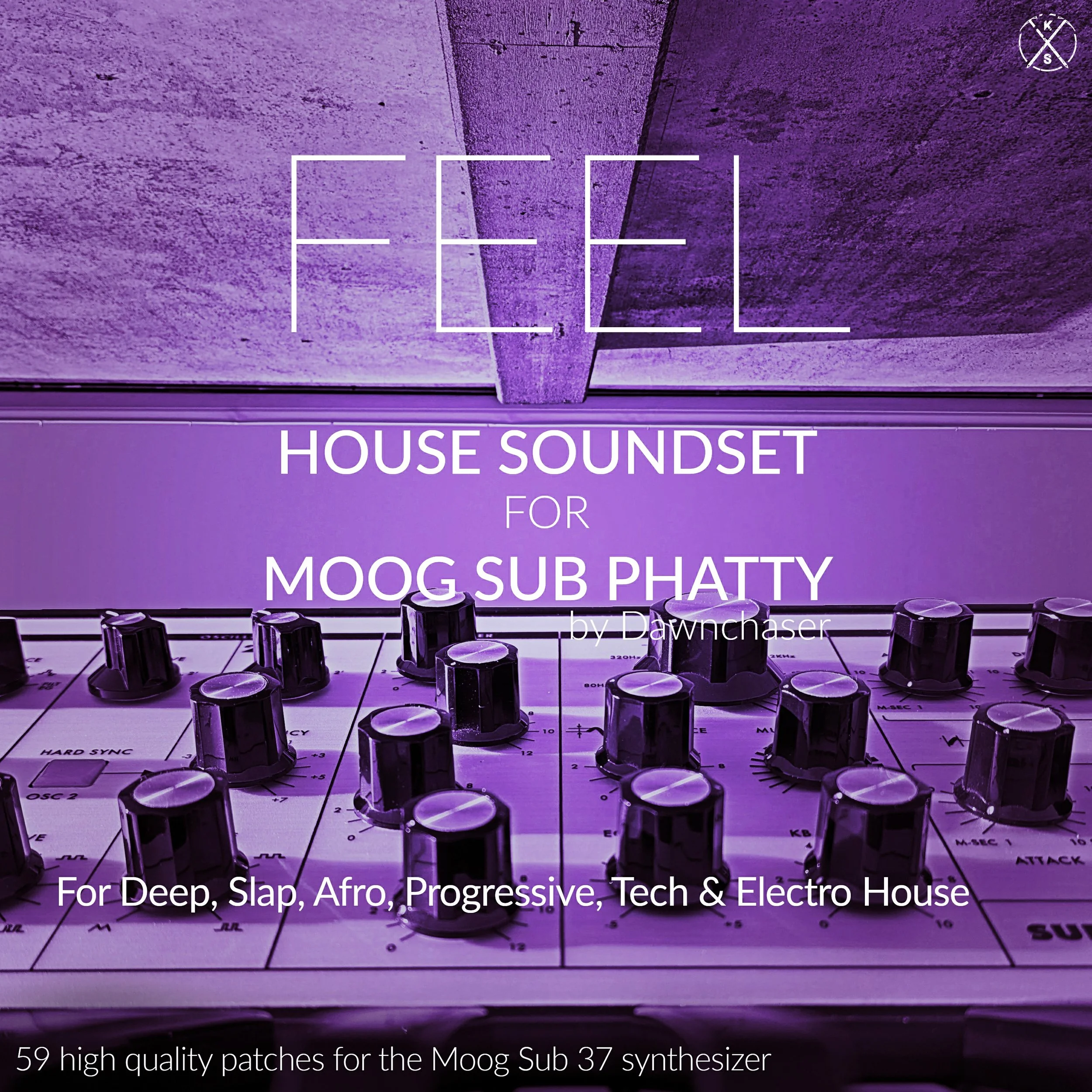
The 2 main Oscs have full wave sweep capabilities, ranging from pure Triangle wave all the way to narrow Pulse, in a continuous function. It’s quite nice for creating some very exotic dirty electro basses and Psytrance noises.

The Osc Sync function is interesting, although it doesn’t feel like it can penetrate the same territory as the Slim Phatty’s Osc Sync. The Slim’s Sync can veer into full on FM territory with a little coaxing, and DX7 style sounds can be managed on it, whereas the Sub Phatty’s sync never quite achieves the same variety of metallic and hollow sounds.

The Pink Noise generator is helpful for some classes of sounds - the manual states producers like to use it for Percussion sounds. But for modern Techno, House, and Trance producers, Pink Noise is much less useful for modern sound design, since the low frequencies tend to crowd out the rest of the sound and mess with the tone balance. Pure White Noise or some kind of sweepable Noise generator that allows for Pink and White Noise would have been much more useful for making modern Melodic Techno and Progressive Trance sounds.

The 2 layers of Detune capabilities for the Sub Phatty are a welcome touch though, as the single Freq knob on the Slim Phatty makes it very difficult to create detuned Trance and Psytrance saw leads without veering off into uncontrolled tuning territory. Being able to detune very slightly on the main Frequency knob and then adjust the secondary knob a tiny to taste makes it easy to make usable sounds very quickly.

It’s worth noting that pushing the Oscs too loud starts to overdrive them, so factor that into your sound design choices when working with it. A delicate approach is needed when trying to make smooth and gentle sounds with these oscillators.


FILTERS

Besides the Oscillators, this is really what everyone goes to Moog for. But does it have that Classic Moog Ladder Filter Sound?

The Sub Phatty is brighter, is our first impression. It certainly cuts off at a higher frequency than the Slim Phatty. And that sound brightens up further when you reduce the filter slope curves. Tricky part is accessing those slope curves. There’s some obtuse ways to access them via some front panel controls, which I did manage with the manual handy. But it was far from convenient. With the VST editor from Moog, it’s much much easier to change those, and access some other deep settings that expand the sound design capabilities of the synth.

The resonance pushes into self-oscillation and yields some extremely gnarly sounds when cranked in tandem with the Multidrive. It doesn’t quite sound as bright on 303-style Acid sounds that use a low cutoff and moderate Envelope Amount settings, but it can achieve some nice grit that adds fun textures to Techno and Trance tracks.

It didn’t feel quite as ‘round” and smooth as the Slim Phatty, or even the Prophet Rev2, but it did surprise us with its character while experimenting with Plucks and deep Basses.


ENVELOPES

The Envelopes here are pretty normal, as far as synths go, so there’s not too much to say here. The Attack is a bit shorter and tighter than Some folks may be accustomed to, so you have to push it really far to make slow evolving sweeps. It’s great for Plucked sounds, though. The snappy envelopes make Techno and Trance plucks a breeze to design.


LFO

Now this is where some serious excitement is to be had. The Sub Phatty has 3 different LFO Speed Modes, which can be changed via obtuse key combos on the synth… or more easily on the VST editor. And that’s where the fun begins. Switching between Slow, Mid, and Hi speeds allows you to do really gentle wavering swells, more moderate vibratos, or even insane audio rate modulation. We got a lot of great use out of these settings while designing buzzy Hands Up and Progressive House Leads, and on some cinematic sweep type patches. This is one of the Sub Phatty’s strongest points, and really puts it in a league more in line with crazy super-mod synths like the Blofeld or Virus.


MODULATION

As this is an analog synth marketed as more of a budget synth a notch or two beyond the Little Phatty, there isn’t too much to talk about here. Routing options are pretty minimal. It would have been nice if the Amount controls began at 12:00 and could be changed to positive or negative values to yield more exotic modulations. But for the synth’s overall capabilities, the modulation options are workable.


EFFECTS

“Effects” is a bit of an inaccurate header for this section. All the Sub Phatty has is Multidrive. Which we found to be more of a Saturator on lower settings, and then at higher settings, it turns into distortion. It doesn’t mangle the sound quite as nicely as the Overdrive on the Slim Phatty or the Feedback + Multidrive combo on the Sub37, but it does yield some nice added grit to sounds.


CONCLUSION

So, at the end of all things, is the Sub Phatty worthit? Is it still relevant in 2025?

While it lacks in modulation capabilities and the Pink Noise isn’t nearly as useful as the manual claims, this synth has a lot of heft to it, and if you are looking for a snappy semi-modern sounding Moog that can do aggressive sounds and more serene tones, this one would work well for you.

Its oscillators are big and aggressive, and the filter does add a lot of nice character.

In the right contexts, this synth could stand front and center in some very big tunes, and add a lot of welcome character. It definitely works great for Tech and Electro House basses.

So while it might not be our first choice for an analog synth, if you happen to find one at a good price, it could serve a lot of solid uses in your tunes and set you apart from everyone else. Its aggressive gutsy character almost takes it to Prodigy territory, and if you can run it through other FX for reverb or distortion or chorus, you will get some very exciting tones out of it.

So overall, we might recommend a couple other synths before this one to Synth Newbies, but we would not turn our nose up at future opportunities to work on it either. We’d recommend it for producers and keyboardists after a specific kind of gritty sound.

That’s our take on it, anyway.

Dawnchaser is a Pacific Northwest-based electronic music producer, mountaineer, documenter of all things adventure, mountain, and travel-related, and manager of Kulshan Recordings. If he’s not in the studio writing music about adventures, he’s out on one.


Synth Showdown is here!

Ever wondered about the differences in sound between a Moog and a Prophet?

Wonder no more!

Dawnchaser is a Pacific Northwest-based electronic music producer, mountaineer, documenter of all things adventure, mountain, and travel-related, and manager of Kulshan Recordings. If he’s not in the studio writing music about adventures, he’s out on one.


Keeping Your Moog Slim Phatty In Tune

Just got a Slim Phatty, and finding it drifts out of tune? Looking for a quick way to check it and make sure it stays in tune during your production sessions?

Watch the video below for a quick tip to keep your Slim and Little Phatty in tune!

Dawnchaser is a Pacific Northwest-based electronic music producer, mountaineer, documenter of all things adventure, mountain, and travel-related, and manager of Kulshan Recordings. If he’s not in the studio writing music about adventures, he’s out on one.


Analog vs Virtual Analog vs Software Synths - What's Right For Me?

Analog synths? Virtual Analog synths? Digital? Virtual synths? There's so much out there, and so much contradictory information, you might be feeling a little overwhelmed right now.

If you're new to synthesizers, or music production in general, and have been browsing forums and Facebook groups, you might be feeling a little lost right now…

Read More

What To Know Before Buying Hardware Synths

What was your first glimpse into the world of hardware synthesizers? Was it a producer's masterclass, and their wall of modulars that caught your eye? A Bad Gear episode? Does your favorite artist use hardware? Did you wander through a music store, and play around on a display synth, and decide you just had to have one?


No doubt you may be prowling through Sweetwater's or Reverb's offerings, and feeling a little overwhelmed. Maybe you want one, but aren't sure if hardware is for you.


In today's article, I'll break down some hardware basics, things to know, and how to help you decide what, if any, pieces of gear you should get.


1. Know Why You're Getting Gear

Let's get the big question out of the way first: what do you want hardware for? Do you have a specific need for hardware, that VSTs and samples can't provide?

Hardware synths aren't cheap (not good ones, anyway). There's no two ways about it. Beyond the actual synth itself, you are also looking at TS cables, MIDI/ MIDI-USB cables, patch cables (if you're going modular), and possibly a newer/ bigger audio interface to accommodate the synth. Before you get a synth, you need to ask yourself if you're willing to take on those extra costs.

Hardware isn't a magic bullet that will immediately make you sound instantly better. If you're not writing good music without hardware, you still won't write good music with it. It certainly helps if you've been producing for a few years, and have a few songs/ remixes out on a record label or two, before you start browsing for gear. Otherwise you're wasting time and money on equipment you likely don't need.

If you've been at it a while though, and feel like gear is the next natural step for your tunes, it's time to decide what type of synth you want.


Which brings us to...


37003674_10101200559301689_4187039221732605952_o.jpg

2. Analog vs Digital

Just to clear the air here: I don't hold Analog on any magic pedestal compared to Digital. They both serve their purpose and have their own special characteristics that will suit different needs at different times.

The only reason we're covering it here now, is because there are certain aspects of analog synthesis you need to be prepared for before buying one.

Namely:

Analog synths frequently tend to be a lot more expensive than digital synths. Especially polyphonic analogs (more on that in a bit). They also tend to be much more limited with effects, voicing, and waveform options.

Analog synths, especially Moogs, often require extensive warmup times before they're properly in tune, and can be used for music that requires stable tone.

28070719_10101118849868049_6915370586194274166_o.jpg

You may not be able to store patches and presets on slightly older Analog synths, so making and storing patches requires more time and a photographic memory to do.

However, Analog synths have certain timbral characteristics that make them desirable for music production. The analag signal generation and filters can lend a certain warmth and personality to a sound that a fully digital signal might not. This is because of the inherently imperfect nature of generating an audio signal from a voltage-controller oscillator. There are slight and subtle imperfections in the sound that give analog its warmer, "fatter" character. The filters, being analog, often sound smoother than digital filters, so you can make sweeps and sounds with much

That said, digital has more pros than cons - especially these days.

More built-in FX, more waveform options (including wavetables, and Super/HyperSaws), more routing and modulation options, much higher voicing, and higher likelihood of proper integration with your DAW via USB (or at least a VST interface controlled by MIDI data).


And so we go on to...

27973805_10101118034816419_1045510251804442418_n.jpg


3. Monophonic vs Polyphonic

When you come from the VST world, it's easy to forget that there was once a time when synthesizers could only play one note at a time, due to the limitations of the oscillators. That time is long past, but Monophonic, Duophonic, and Polyphonic synths are all still around, still being made, and will likely be around forever. So how to choose?

First and foremost, a monophonic synth can only play one note at a time. No chords, or lush harmonic strings or pads will be (easily) gotten from a mono synth. They tend to be analog synths, and so thick basslines and distorted leads are what mono synths are most commonly used for.

A duophonic (sometimes called paraphonic) synth can only play two notes at a time. They're not super common, but they pop up occasionally.

A polyphonic synth can, as its name denotes, play many notes at once. A poly synth will typically range from 4-100+ voices, depending on the complexity of the patch. With a few exceptions, poly synths tend to be digital, and as such can create sounds and timbres no analog synth can generate. You can also write lush choir and string and pad sections, create sounds with long release tails, and layer chords in ways no mono synth is capable. As an added bonus, most poly synths have a Mono feature enabled, allowing you to turn the poly synth into a mono synth for specific sounds.

And due to the generally digital nature of poly synths, patch storage and recall is a feature of all poly synths, allowing you to store and bring back up presets and sounds you made, for future use.


4. Effects

Effects are a somewhat divisive issue in the synth community. Some love them in their synths, others prefer you only play and record synths dry (then use outboard effects).

Again, it largely boils down to personal preference, and the type of gear you're looking at. Analog synths tend to be more minimal on effects. You might get a Distortion effect, maybe a Chorus, and perhaps a Delay effect, if it's slightly newer. Moogs are famously minimalist in this department. Digital synths usually come with a full battery of effects ranging from Distortion, to Delay, Reverb, Flanger, Chorus, Phaser, possibly Saturation, and multiple types of distortion. Digital synths with lots of effects tend to be more expensive, but in most cases, the effects tend to be quite good (the Virus TI2 has some of the best onboard effects on the market).

When considering buying hardware, considering the onboard effects as well as the filters and oscillators will also be worth investigating.


5. Finally...

Do your homework. There are hundreds of synths out there, each with their own special timbral characteristics and features, and it would be impossible to try and list them all here.

As a general rule of thumb though, based on genres, these are features you'll need to look for to find a good synth you'll get lots of use out of:


Trance: Polyphonic, with 5-100 voices. Some kind of Unisono Spread/ SuperSaw detune feature to create wide, complex trance synths. Good onboard reverb and delay are nice but not necessary. A good Chorus effect will serve you well. The more modulation options, the better.


House: Depending on the subgenre of house, a Monophonic or Duo/Paraphonic synth will serve you well, although a Polyphonic synth for bigroom house producers will do you a lot of good. Fat Analog warmth for basslines and leads is helpful, as is decent distortion capabilities. Analog filters will definitely be a plus.


Dubstep/ Riddim: Polyphonic Digital, for sounds requiring wavetables and lots of modulation, as well as high enough voicing counts to handle complex wavetable modulation. Onboard reverb/ delay not quite as essential, but solid distortion is a must. The more modulation options the better.


Drum & Bass: Depending on the style of DnB, a good Mono or Para synth will serve you well for Reese basses, deep sub basslines, and intense leads. Either Analog or Digital will work equally well, although the added warmth from Analog distortion might add a nice touch to the basslines.


Techno: Largely depends on style of Techno, but an Analog Mono or Duophonic synth will sound just right for techno. All the warm fat low end and oddball lead sounds will be done quite nicely by an Analog Mono. A Digital Poly or Paraphonic synth will also do super nicely, but the extra voicing and tons of added features are a bit on the overkill side.


With this guide in hand, I hope you can go forward and make a better, more informed hardware purchase.


Play on!

IMG_20180720_185828~2.jpg

Dawnchaser is a Pacific Northwest-based electronic music producer, mountaineer, documenter of all things adventure, mountain, and travel-related, and manager of Kulshan Recordings. If he’s not in the studio writing music about adventures, he’s out on one.


"High quality soundsets! 5/5" - DuMonde

〰️"Awesome sound banks for trance music for the oldschool vibes!" - DJ Darroo

"Epic, lush, and spacious sounds... Highly recommend checking out for any Rave/Eurodance/Trance producer" - DJ Triplestar

"High quality soundsets! 5/5" - DuMonde 〰️"Awesome sound banks for trance music for the oldschool vibes!" - DJ Darroo "Epic, lush, and spacious sounds... Highly recommend checking out for any Rave/Eurodance/Trance producer" - DJ Triplestar

Kulshan Studios is proudly based in Sedro-Woolley Washington, in the heart of the Pacific Northwest