Top 10 Hardware Synths For Psytrance Producers
Psytrance producers! Been flicking through Serum and Diva presets, and just not landing on anything that sticks? Been feeling a pull towards a more classic vibe, or a more organic songwriting workflow? Want some more characterful vibes for your next zenonesque bush doof tune? Take a gander at this list
Access Virus TI2

Let’s be honest. You all knew this was gonna be on the list. The Virus series has been the gold standard for Psytrance for 20+ years, and the TI2 the crown jewel of them all. Deep mod matrix, HyperSaws, analog waveforms, wavetables, graintables, and tons of FX and extra envelopes make it god-tier for Psytrance of all types. Shame the DSP chips are out of production and the synth has a finite lifespan now. But at least it lives on in the OsTIrus plugin by The Usual Suspects. Nothing beats the hands on tactile feel of using the real hardware though. If you can get your hands on a physical unit, it is fun and exciting to work with for everything from airy morning psy down to the dankest zenonesque.
Polyphony: 90+ voices
Multitimbral: 16 parts
Oscillators: 3 osc + subosc + noise, FM, Sync
Waveforms: Sine / pulse / saw / hypersaw / wavetable / granular / formant
Filter: dual LP/HP/BP/BR with envelopes and addtional multi-pole analog emulations (includes Minimoog 4-pole emulation)
LFO: 3 LFOs, multiple options plus mod matrix 18 slots
Envelope: Amp / Filter / 'LFO as envelope' option
Sequencer: none onboard
Arpeggiator: Up / Down / Random / Chord / Multiple additions, editable in software to any variation
Effects: Reverbs, Delays, EQs with Q and freq control, Tape Delays, Distortions (multiple), Phasers, Flangers, Chorus, Analog EQs, Vocoder.
Memory: 128 patches in each of 30 banks plus USB storage / Librarian with additional free patchbanks provided regularly by Access
Control: MIDI, USB, 16-part multitimbral in Multi or sequencer modes
Novation Mininova
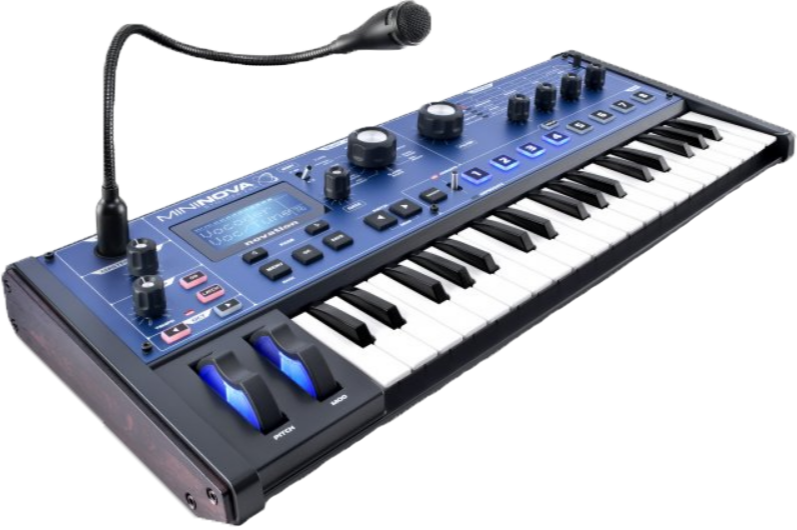
If you want the power of a Virus, but at a fraction of the cost, the Mininova is your best bet. It also has a deep mod matrix, and each oscillator in any mode can be turned into a Super-style waveform via the Density parameters, which is super nice for crazy evolving pads and atmospheric textures. The VSync is also fun for approximating FM type sounds. The mod matrix and FX give this synth some serious power for creating trippy evolving textures and blurbly noises and gritty stabs, which make for some very nice chunky prog and forest psy.
Polyphony - Up to 18-note polyphony (dynamic voicing)
Multitimbral - Mono-Timbral (1 Part)
Synthesis Method - Based on Supernova II
Waveforms include: Square, sine, tri, sawtooth, pulse, 9 x saw:pulse combinations. 20 x digital waveforms. 36 x wavetables
Effects- Distortion - up to 2 instances. Compressor - up to 2 instances. Chorus/Phase - up to 4 instances. Delay - up to 2 instances. Reverb - up to 2 instances. Gator. EQ. 12 band vocoder.
Arpeggiator - 33 patterns. Chord function - lock up to 10 notes
Patch storage up to 512 on hardware (ships with 300 factory patches)
Controllers - 8 x touch sensitive encoders. 1 x large smooth encoder (with back-lit filter lock buttons). 1 x large patch select/speed dial encoder. 2 x volume & monitor mix dials. 39 x LED lit/indicated buttons. 1 x Pitch wheel (LED lit). 1 x Modulation wheel (LED lit)
37-note keyboard with velocity and aftertouch
Connections - XLR dynamic mic input. 2 x ¼" jack inputs. 2 x ¼" jack outputs. 2 x ¼" jack aux outputs. 1 x ¼" jack headphone output. Expression pedal on ¼" jack input. Sustain pedal on ¼" jack input. MIDI in/out/thru. 12 volt power input. USB port (can be powered via USB). Kensington Lock port
Waldorf Blofeld
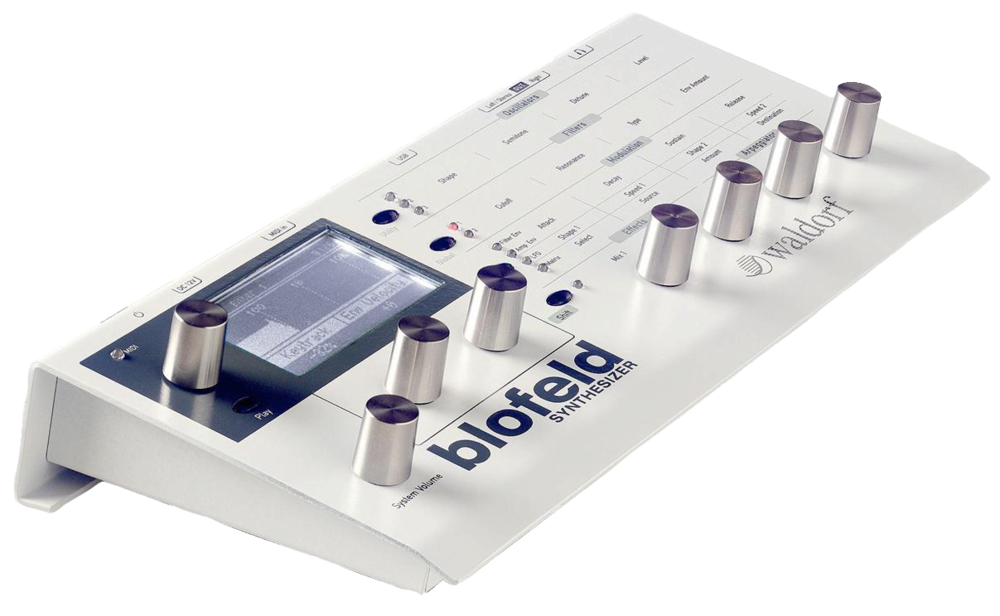
Definitely an underrated Psytrance powerhouse. This one has features few other synths have, since alongside the usual analog waveforms and wavetables, you also get some exotic features like Comb Filters and an even deeper mod matrix than the Mininova. The ability to manually brighten up individual oscillators via the Brilliance setting also allows this synth to cut through a mix with a precision even the Virus can’t match by default. The Blofeld is definitely a good runner-up if you can’t afford a Virus, but be prepared to invest in a dedicated reverb plugin/ pedal/ rack unit if you want to exploit this synth to its fullest (the onboard reverb is one of the weakest points of the synth). And it even comes in a VST and AU plugin version for Windows and PC, if you can’t spring for a physical unit.
Polyphony: 25 voices maximum (Poly, Mono, Dual or Unison modes)
Multitimbral: 16 parts
Sampler: 44.1kHz mono with 60 Mb RAM
Oscillators: 3 oscillators per voice (128' to 1/2') plus noise, frequency modulation, ring modulation
Waveforms: All Q Oscillator models: sine, saw, triangle, square with PWM; 68 digital 16-bit wavetables from Microwave II/XT/XTK
LFO: 3 LFOs per voice with square, sine, saw, triangle, S&H, random with delay and fade in/out
Modulation: Modulation Matrix with 16 Slots, freely programmable
Filter: 2 independent Multi Mode Filters per voice: Low pass, High pass, Band pass, Notch, Comb; 12 or 24 dB/oct modes
Envelope: 4 Envelopes per voice, ADSR, AD1S1D2S2R, One Shot, Loopable
Effects: 2 Effect units with Chorus, Flanger, Phaser, Overdrive, Decimator, Delay, Reverb
Vocoder: None
Sequencer: None
Arpeggiator: Programmable, 16 steps, Up, Down, Alt Up, Alt Down, Random
Memory: 1024 sounds, 128 multi sets
Control: MIDI IN (plus OUT on Keyboard), USB
SEQUENTIAL PROPHET REV2
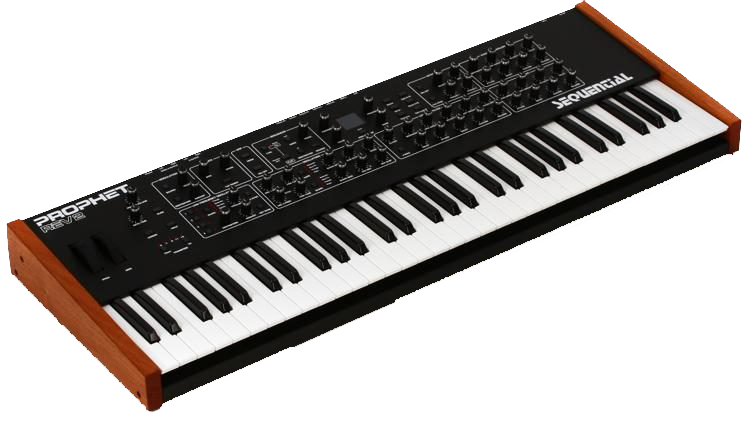
The Rev2 is where you wanna go if you want a polyphonic analog without shelling out a fortune for a Moog One, or rolling the dice on an Andromeda A6, or losing stereo panning on the other Prophets (or losing significant polyphony using something like a Fourm). This is more or less the Virus of modern analogs, with a nice deep mod matrix, bitimbrality, and mostly solid FX (the reverb and phaser leave something to be desired, and the Distortion sounds great, but increases the noise floor of the outputs, which is really strange). On the 4-pole mode it does warm organic evolving plucks and pads and leads super nicely, and in Unison Mode, if you pick the right number of voices (odd number voices are safest), you can make bass pads that you can spread wide or pull to mono, and when summed to mono/ pull the lows down to mono for mono-stereo compatibility, you won’t lose the whole sound to phase cancellation. And despite the Rev2’s reputation for sounding “cold” or “thin” compared to other analogs, it works really nicely as a bass synth, doing tight and deep prog and forest psy basses really nicely. And if you scoop the 3000 Hz range a little, it’s also really nice for warm organic pad sounds. If you plan to use it for pads, do budget for the 16 voice version/ the voice expansion card upgrade, as it is a must for pads on this synth.
Polyphony - 8 or 16 voice polyphony (8 voice version is expandable to 16 with installation of additional voice card)
Oscillators - 2 digitally controlled analog oscillators (DCOs) per voice (plus sub octave on oscillator 1) with selectable sawtooth, triangle, saw/triangle mix, and pulse waves (with pulse-width modulation). Glide (portamento): separate rates per oscillator. White noise generator. Analog VCAs. Hard sync
Filters - 1 analog Curtis low-pass filter per voice, selectable 2- and 4-pole operation (self-resonating in 4-pole mode)
Envelopes - 3 envelope generators: filter, VCA, and assignable (four-stage ADSR + delay); Envelope 3 can loop.
Sequencer - Polyphonic step sequencer with up to 64 steps (6 notes per step), and ties and rests. Separate 16 x 4 gated step sequencer. Each layer can have a separate sequence.
LFOs - 4 LFO’s with key sync per LFO
Modulation - 8-slot modulation matrix, 22 sources, 53 destinations, 5 additional dedicated sources: mod wheel, pressure, velocity, breath controller, footswitch
Arpeggiator - Programmable arpeggiator with up, down, up+down, random, assign modes. Selectable note value: 16th note, 8th note triplet, 8th note, dotted 8th note, quarter note. One, two, or three octave range. Re-latching arpeggiation. Note repeat
Controls - 5-octave keyboard with semi-weighted action, velocity, and aftertouch. 55 knobs and 35 buttons enable deep and comprehensive editing with little to no menu diving.. Spring-loaded pitch wheel and assignable mod wheel
Memory - 512 Factory Programs (4 banks of 128) and 512 fully editable User Programs with 2 layers (2 separate sounds) in each Program
In/Out - MIDI In, Out, Thru. Main stereo audio output: 1/4″ unbalanced. Output B stereo audio output: 1/4″ unbalanced. Sustain pedal input: accepts normally on or normally off momentary footswitch.
Pedal/CV input - responds to expression pedals or control voltages ranging from 0 to 5 VDC (protected against higher or negative voltages). Headphone output: 1/4″ stereo phone jack.
Amiranu used the Prophet Rev2 extensively in this track, for all the bass sounds, and the big pluck
ACCESS VIRUS C
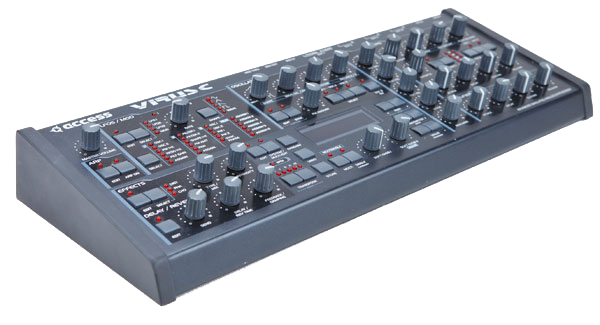
No Psytrance hardware synth list is complete without a Virus C on it, eh. Before the TI line came along, the C was the de facto standard for Full On Psytrance, and was present in many studios back in the day. It still has a nice punchy sound, and even though the TI and TI2 later surpassed it, it still offers almost the same sound, and many of the same features as the TI, and if you can live without wavetables, per-oscillator HyperSaws, and rotary-speaker and cabinet amp model FX, the C is a rock-solid choice. You can even Try Before You Buy vis a vis the Osirus plugin from The Usual Suspects, so if you like the idea of a C but wanna hear how it sounds before committing a bunch of money to a physical unit, you can use the plugin as a testing ground.
Polyphony: 32 voices
Oscillators: 3 Osc per voice plus 1 Sub-Osc: Sawtooth, variable pulse, sine, triangle, oscillator sync. 5 FM Modes: 64 digital FM spectral waveforms.
LFO: 3 LFOs with 68 waveforms
Filter: 2 independent resonant filters; lowpass, hipass, bandpass, band reject, parallel, split & 2 serial modes with up to 36dB/voice (6-poles), overdrive/saturation.
VCA: 2 ADSTR envelopes
ModMatrix: 6 Sources, 9 Destinations
Effects: 98 simultaneous effects: 16 Phasers, 16 Choruses, 16 Distortions, 16 Ring Modulators, 16 Parametric EQs, Delay, 32-Band Vocoder, Surround Sound.
Memory: 1024 programs (256 User / 768 ROM / 128 Multi)
Control: MIDI (16 multitimbral parts)
waldorf iridium core
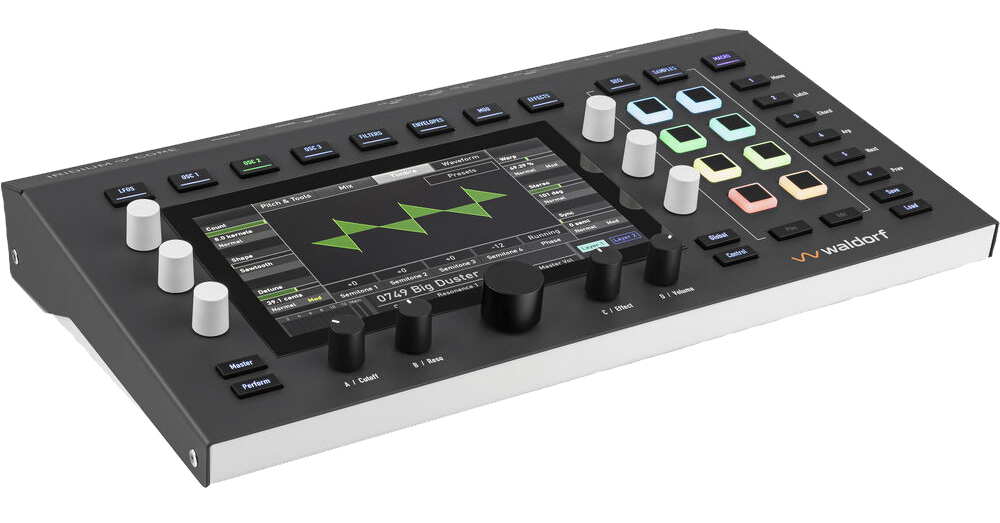
This one’s the new kid on the block, and almost never gets talked about in Psytrance circles. Given the price point of everything in the Iridium and Quantum lines, it’s not hard to see why it gets overlooked. But that is also why for more seasoned artists and folks who want to take their productions and sound design skills out of the box and into a physical unit, the Iridium line is probably the best choice among modern poly synths (and the Iridium Core is less expensive than a Virus TI). The Iridium Core is more or less what you’d get if you cross-bred a Blofeld with a Mininova. You can make all the analog style waveforms go Super-style same as on the Mininova (not the wavetables though, for unknown reasons), greatly-improved FX (including a reverb that surpasses the Virus TI reverb!), and possibly the deepest mod matrix of any other synth. The core sound is really nice, and regarding the core, the 12 stock voices can be expanded to 16 with the 4.1.0 OS update, andd the synth is still receiving updates, so new features are being added regularly (the most recent being a new Shimmer reverb, which is super cool). The Iridium Core would be extremely solid for every kind of Psy, although it seems well-suited to Morning Full On, Prog, Forest, and Dark Psy.
Polyphony: 12 voices (16 with 4.1.0 beta OS update)
Oscillators: 3 oscillators capable of 5 synthesis modes incl Wavetable, Waveform (VA), Particle, Resonator, Kernel
Filters: Multiple Model filters incl SVF, Raiser, Largo, Nave, PPG, and Quantum, in 12/24dB/octave with LP/BP/HP types available
Envelope Generator (EG): 6 LFO, 6 ADSR
Included presets: 1,700 factory patches
Audio outputs: 2 x 1/4" TS jacks Audio inputs: 2 x 1/4" TS jacks
MIDI connectivity: In/Out/USB
USB connectivity: Yes
CV/Gate: Yes
Headphone Output: Yes
Sequencer: 64-step Arpeggiator
Advanced Effects: Reverb (incl Shimmer Mode with 4.1.0 beta 2 OS update), delay, chorus, phaser, flanger, drive, EQ, compressor, tremolo
Display: High-resolution touch screen
CLAVIA NORD LEAD 3
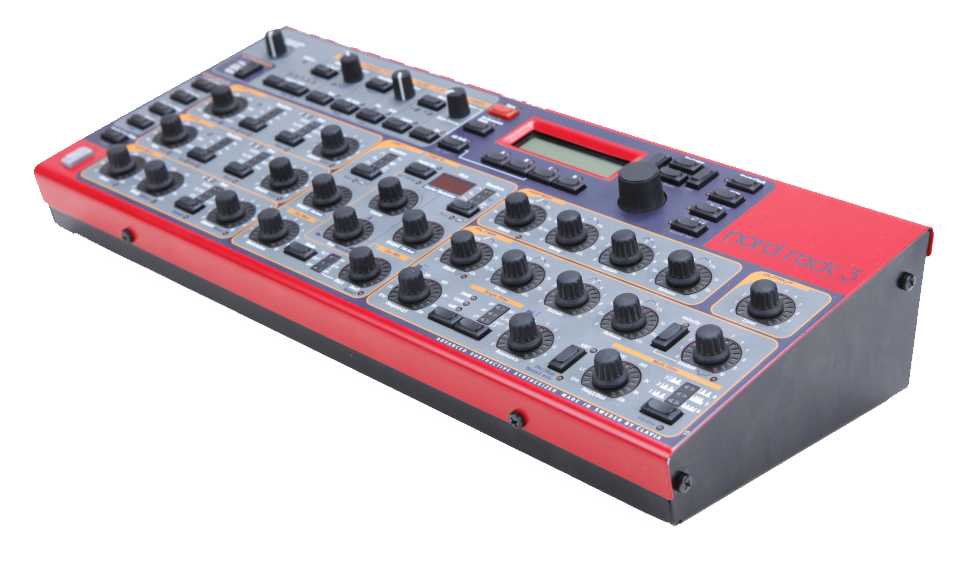
Possibly the most underrated and least-loved synth on this list, the Nord Lead 3 has gotten a lot of ire over the years, but it really doesn’t deserve it. Its core sound isn’t as bright as the Nord Lead 2 or 2X, but what it lacks in top end fizziness, it makes up for by being a monster pad and crazy FM super synth. If Forest and Swamp Psy are your thing, or you are keen on making some late 2000s style dreamy melodic progressive a la Ovnimoon or Invisible Reality, this synth is awesome for those sounds. Just pair with a quality Phaser, Reverb, and Delay, and you’ll be very happy indeed.
Plus, the LED encoders look super cool when you’re producing in the dark and wanna feel like you’re making Psy in a haunted forest.
Polyphony: 24 voices
Oscillators: 2 oscillator groups each with Six waveforms: sine, saw, triangle, square (pulse with width modulation), noise, synced noise, dual sine; 2- and 4-op FM and differential FM; osc-sync; ring-modulation; variable unison.
LFO: 2 per voice, syncable to MIDI. Triangle, saw, square, smooth and stepped random, and triple-peak sine waveforms. Seperate vibrato effect.
Filter: 2 multi-mode filters (series or parallel). Lowpass, Bandpass, Highpass, LP-HP, LP-LP and Classic mode. 1-, 2-, or 4-pole.
VCA: ADSR envelopes for amplitude and filter; Amplifier Gain control
Memory: 1024 patches, 256 performances
Control: MIDI IN/OUT/THRU (4-parts)
Roland JP-8080
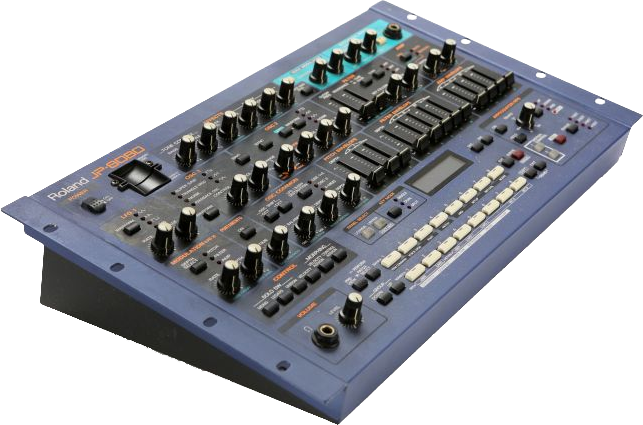
Most folks know the JP-8080 as a Euro-Trance synth, but it’s still really great for mystical, epic sounds for Full On and Prog Psy. Amiranu told us that many many years ago, Namarrkon even offered to sell him his JP-8080, which he had used to produce his Earthbound EP, which alongside the song Hero by Mr Peculiar, is what inspired Amiranu to get into producing Psytrance in the first place. Amiranu says he had to turn down the offer, as he was broke at the time, and the shipping from Australia would have been killer, but later he got one of his own, and confirms it is indeed awesome for Full On and Progressive. So if it was good enough for Namarrkon, it’s good enough for anybody. Plus, The Usual Suspects released a VST plugin version of it, JE-8086, and Adam Szabo also made a JP plugin called Airwave, and Arturia and DiscoDSP also have versions out, so even if you can’t spring for an original 1998 hardware unit, the actual sounds of the gear are accessible to anyone at any budget.
Polyphony: 10 voices
Oscillators: 2 Roland Analog Modeling DSP oscillators: Saw, Square (PWM), Triangle (PWM), SuperSaw (7 de-tuned Saws), Triangle Mod, Feedback OSC
Filter: Resonant 12/24dB/oct low/band/hi pass, 12-band formant filter bank
Effects: 3 onboard effects: Delay; Multi-FX including Chorus, Flanger, Distortion and Tone control
Memory: 384 preset and 128 user patches; 192 preset and 64 user performance
Arpeg/Seq: Onboard Arpeggiator and real-time Phrase Sequencing (RPS) capability
Keyboard: None
Control: MIDI (2 parts)
MOOG SUB 37

It’s not super common to find mono/duophonic synths in Psytrance, but the Sub 37 deserves inclusion because for a mostly-mono synth, it has deep mod capabilities, and a base tone that is really nice for heavy full on basses, and gritty leads. Achieving screechy electric FM noises is tricky, and hipassed/bandpassed resonant zaps are basically impossible, but warm lopassed leads, rolling basses, and single-note plucks all come out really nicely from this machine. Pair it with solid reverb, delay, phaser, chorus, and rate reducer, and you have a top tier analog mono synth to put at the center of your psy spaceship.
Polyphony: Monophonic / Duophonic
Timbrality: 2
Oscillator: 2
LFO: 2
Synthesis type: Analog subtractive
Filter: 1 selectable 6, 12, 18 or 24dB/octave low-pass
Attenuator: ADSR
Aftertouch expression: yes
Velocity expression: yes
Storage memory: 256 patches
Effects: none
Keyboard: 37 keys
External control: MIDI, CV/Gate
KORG MINILOGUE XD
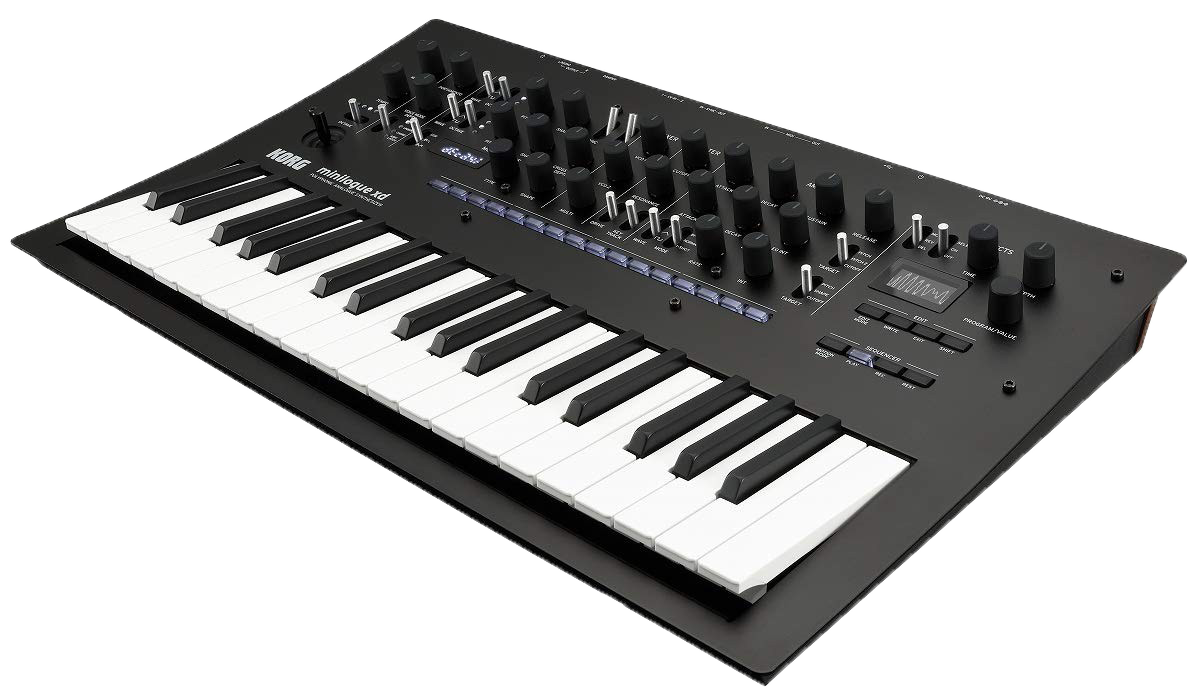
Another synth that’s rarely talked about in Psytrance circles, the Minilogue XD is a secret powerhouse of a unit that lurks in between the Prophet Rev2 and the Sub 37, with some unique features all its own. You can create and upload your own oscillators, and it has FM, and a few extra FX like Ensemble, that give it more depth than other analogs. The 4 voices of polyphony present a bottleneck to just how much you can do with it, but if you relegate it to just leads, plucks, acid sounds, basses, bass pads, and FM screeches and zaps, you can get a lot of mileage out of it. With a little post-processing you could also do some FM using the wavetable side of the synth to create haunting evolving textures, and then do some pan mods and add Valhalla Supermassive reverb to them after the fact to create extra spooky swamp and forest psy ambiences.
Sound Engine: Analog sound generator + Multi digital sound generator
Analog/Digital: Hybrid
Number of Keys: 37
Type of Keys: Slim-key
Velocity Sensitive: Yes
Other Controllers: Joystick
Polyphony: 4 Notes
Presets: 500 Voices (200 factory, 300 user)
Oscillators: 2 x Analog VCO (sawtooth, triangle, square), 1 x Digital (noise, vpm, user)
LFO: 1 x LFO (sawtooth, triangle, square), BPM, Normal, 1-shot
Filter: Sharp Two-pole
Envelope Generator: 1 x AMP EG (ADSR), 1 x EG (attack, decay, EG int, target)
Effects Types: Chorus, Phaser, Flanger, Delay, Reverb, Ensemble
Arpeggiator: 4-voice with Latch mode
Sequencer: 16-step Polyphonic Sequencer, Motion Sequence, Realtime Recording
Audio Outputs: 2 x 1/4" (L/Mono, R)
Headphones: 1 x 1/4"
USB: 1 x Type B
MIDI I/O: In/Out/USB
Pedal Inputs: 1 x 1/4" (damper)
Other I/O: 2 x CV in, Sync in, Sync out
Software: Minilogue Librarian Software
Power Source: 9V DC power supply (included)