Hidden Fine Tune Pitch Modulation Trick For The Access Virus TI
If you’re anything like us, you like to make your patches sound as natural and organic as possible. And pitch modulations are an easy way to do that. We like the subtle pitch decay trick, for making patches behave like acoustic instruments, and for synths like the Nord Lead 3, JP-8080, Mininova, and Blofeld, that’s not too hard to do.
The Virus TI2 however, has been a thorn in our side for a decade on this one. Setting up a basic pitch modulation routing for say, a Mod Source of Env 3 or the Filter Env, and the destination as the oscillators, ends in squeaky disaster. The Osc Pitches are all Coarse by default, and if you mess with those even a little, it sends the tuning to hell in a ham sandwich. Unless you use LFO 3 to modulate the fine pitch for vibrato effects.
But if you want more flexibility in your pitch modulations, check out this technique we just learned!
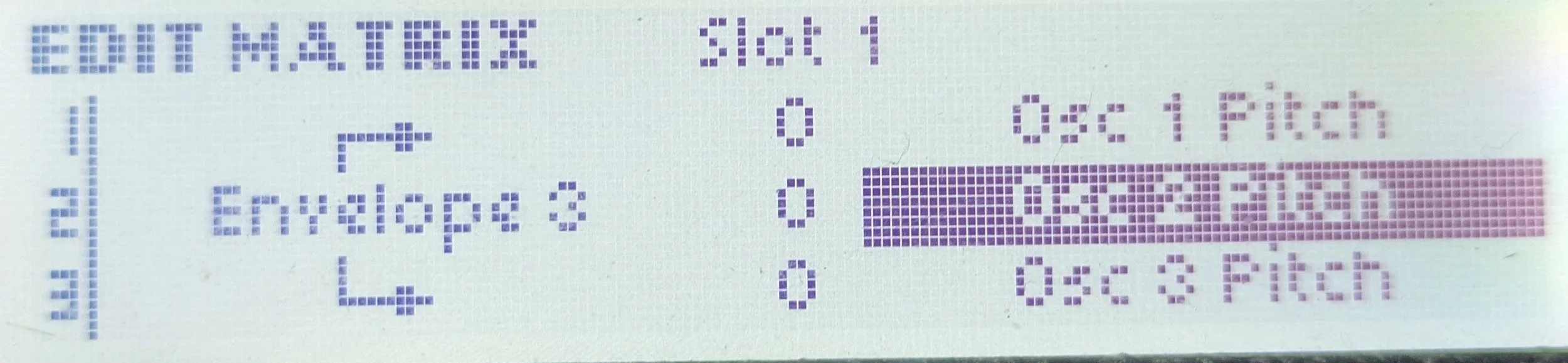
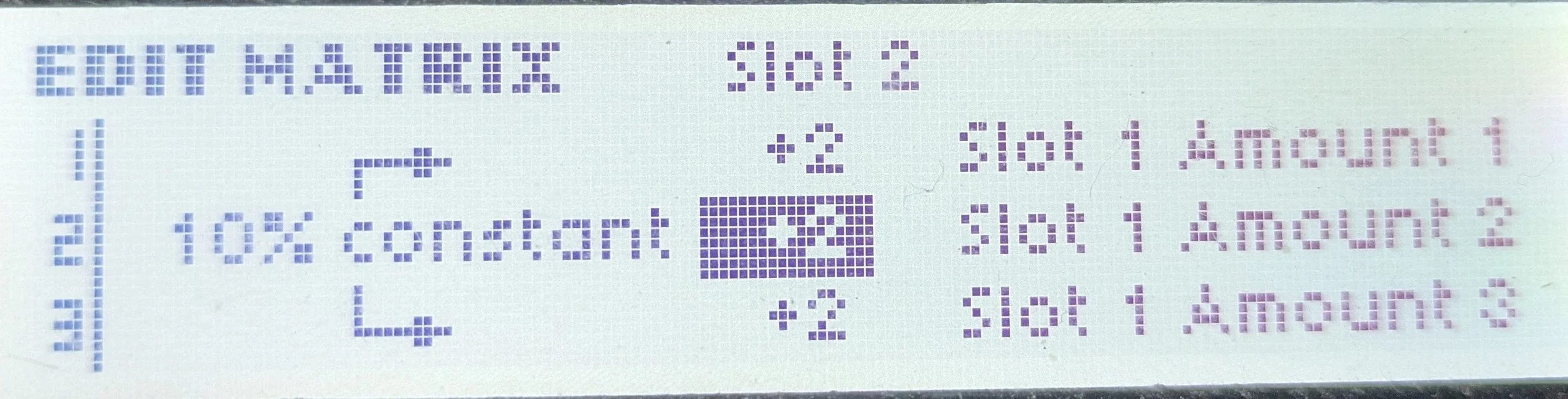
Set up the routings like this (any mod Slot will work, but I chose 1 and 2 for simplicity’s sake), using any Envelope or LFO for the first slot, with the amounts all set to 0. Then set up 1% or 10% constant as the source on the next slot page, and experiment with the Slot 2 Amount numbers to dial it in and get the exactly amount of pitch change you want.
You can use the 1% constant instead of 10%, if you want even more granular control over the pitch.
It’s a little complicated, but it opens up the Virus sonically sooo much more to be able to add subtle pitch changes.
Happy sound designing!

$72.00 (MSRP $87.00 if purchased individually - Save $15 / 17%)
Unlock the ultimate high-energy mainstage collection for your Virus TI with the definitive library for the modern titan of digital hardware synths. The Kulshan Studios Heavyweight Access Virus TI Hard Dance Bundle brings together three specialized hard dance soundsets, delivering aggressive screeches, bouncy donk basses, euphoric leads, and pounding distorted kicks, all ready to drop into your next track.
Whether you are producing high-octane Hands Up, raw Hardstyle, classic Eurodance, or banging Hardcore, this complete collection transforms your TI into an endlessly versatile hard dance powerhouse. Every single patch leverages the signature Virus TI DSP architecture, utilizing massive HyperSaws, complex modulations, aggressive distortion, and the legendary built-in effects.
Key Features:
Total Presets: 282 handcrafted RAM patches organized across 3 individual soundbanks.
Hardware & Plugin Compatibility: 100% compatible with all Access Virus TI series hardware (Virus TI Desktop, TI Keyboard, TI2 Desktop, TI2 Keyboard, TI Polar, and Virus TI Snow). Fully compatible with software emulations including The Usual Suspects OsTIrus plugin (with appropriate firmware ROM), discoDSP Retromulator, and Adam Szabo Viper.
Zero Filler: Every soundbank is strictly genre-focused. No random clangs, useless sound effects, or out-of-place filler patches.
What's Included:
Bounce! Hands Up Soundset: Energetic hands-up leads, iconic bouncy donk basses, euphoric plucks, and catchy synth pads built for maximum energy.
Nuclear Hardstyle Soundset: Brutal screeches, face-melting raw leads, heavy distorted reverse basses, and massive pads designed for mainstage power.
X-Treme Hardcore Soundset: Aggressive Uptempo shrieks, ripping HyperSaw leads, heavy pads, and powerful distorted basses built to cut through the densest mixes.
What You Get:
All patches in standard .mid / .syx format, sorted into their specific bank folders inside a single bulk .zip file.
Why Grab The Heavyweight Hard Dance Bundle?
Purchasing these 3 hard dance banks individually at $29 adds up to $87. The Kulshan Studios Heavyweight Access Virus TI Hard Dance Bundle gives you instant access to Kulshan Studios' complete archive of high-octane hard dance soundsets at a 17% discount, ensuring you have the exact right hardware patch ready the moment inspiration strikes in the studio.
(Note: This is a digital download containing SysEx / MIDI patch files. Loadable via Access Virus Control, standard MIDI librarian software, hardware SysEx dumps, or compatible VST emulations).
~ All bundles are excluded from additional discount codes and sales.

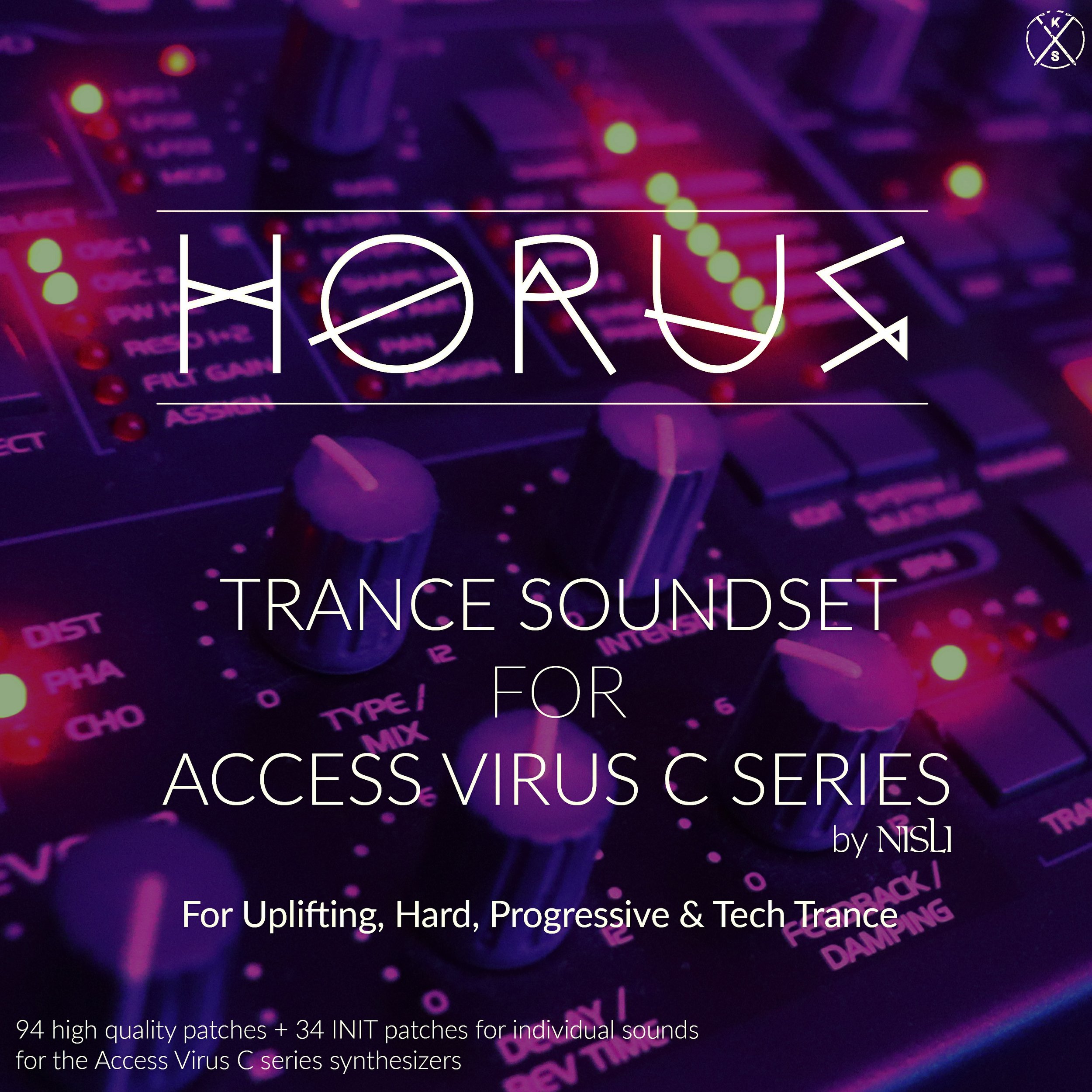
95 uplifting Trance presets for the legendary Access Virus TI synthesizer series. These patches are 100% Trance-oriented, which means no weird brass, pianos, or FX. The patches in Ascension come straight out of songs written using the TI2. So this soundset is designed to exploit the TI’s wavetables, HyperSaws, and multitimbral virtual analog sound engine to their fullest potential!
Patches in Ascension are based on sounds from songs by the likes of ATB, Phalanx, Alphazone, Armin van Buuren, Vengeance, BT, Rank 1, Cosmic Culture, Denga & Manus, and many many more!
And to cap off the bank some patches were set to INIT, so you have room to write and store your own patches without overwriting any existing sounds!
No additional FX were applied to these sounds post-recording
Sounds in this preset pack are suitable for the Uplifting Trance, Hard Trance, Tech Trance, Progressive Trance, and Classic Trance genres, and are organized by category into Leads, Plucks, Pads, Acid sounds, and Basses, for quick reference
All patches are royalty-free and delivered instantly via email as a 24-hour download link
Requirements: Access Virus TI, TI2, Snow, or Polar synthesizer
Also compatible with Adam Szabo Viper VSTi,* DiscoDSP Retromulator, and the The Usual Suspects OsTIrus
*there will be some differences in some sounds due to differences in the architecture and features between the TI2 and Viper
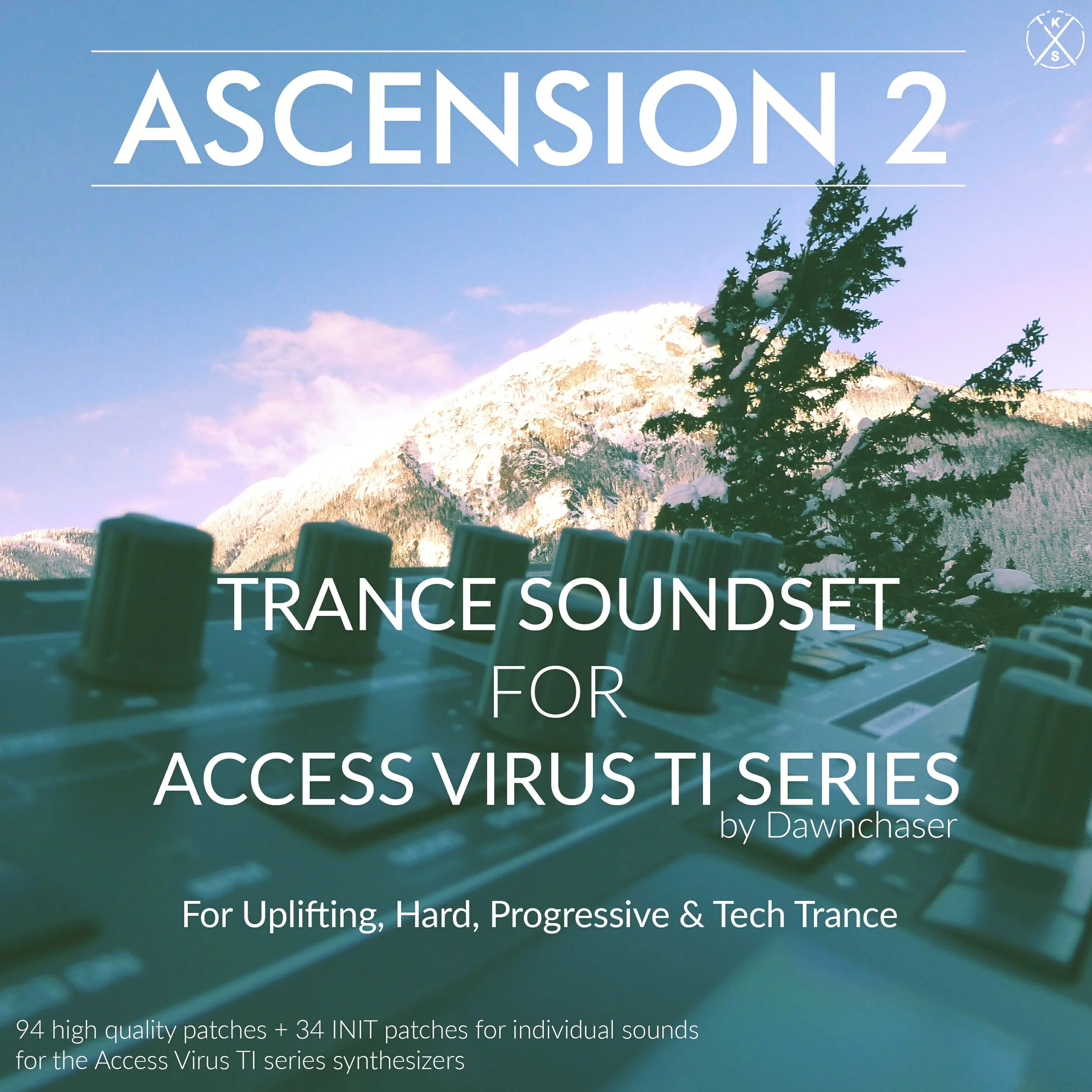
94 uplifting Trance presets for the legendary Access Virus TI synthesizer series. These patches are 100% Trance-oriented, which means no weird brass, pianos, or FX. The patches in Ascension 2 come straight out of songs written using the TI2. So this soundset is designed to exploit the TI’s wavetables, HyperSaws, and multitimbral virtual analog sound engine to their fullest potential!
Patches in Ascension 2 are based on sounds from songs by the likes of Orjan Nilsen, Gaia, Alphazone, Armin van Buuren, Sean Tyas, Signum, The Thrillseekers, Rank 1, DuMonde, Arctic Moon, Marcel Woods, Talla 2XLC, and many many more!
And to cap off the bank some patches were set to INIT, so you have room to write and store your own patches without overwriting any existing sounds!
No additional FX were applied to these sounds post-recording
Sounds in this preset pack are suitable for the Uplifting Trance, Hard Trance, Tech Trance, Progressive Trance, and Classic Trance genres, and are organized by category into Leads, Plucks, Pads, Acid sounds, and Basses, for quick reference
All patches are royalty-free and delivered instantly via email as a 24-hour download link
Also compatible with Adam Szabo Viper VSTi,* DiscoDSP Retromulator, and the The Usual Suspects OsTIrus
*there will be some differences in some sounds due to differences in the architecture and features between the TI2 and Viper

94 uplifting Trance presets for the legendary Access Virus TI virtual analog synthesizer series. These patches are 100% Trance-oriented, which means no weird brass, pianos, or FX. The patches in Ascension 3 come straight out of songs written using the TI2. So this soundset is designed to exploit the TI’s wavetables, HyperSaws, and multitimbral virtual analog sound engine to their fullest potential!
Patches in Ascension 3 are based on sounds from songs by the likes of Ferry Corsten, Mat Zo, Alphazone, Armin van Buuren, DuMonde, Roger Shah, Sunlounger, Rank 1, Cosmic Gate, K-System, Denga & Manus, The Squad, Fragma, Aly & Fila, Atlantis, Paul Van Dyk, Giuseppe Ottaviani, Solarstone, 7 Skies, Scooter, Driftmoon, Arnej, and many many more!
And to cap off the bank some patches were set to INIT, so you have room to write and store your own patches without overwriting any existing sounds!
No additional FX were applied to these sounds post-recording
Sounds in this preset pack are suitable for the Uplifting Trance, Hard Trance, Tech Trance, Progressive Trance, and Classic Trance genres, and are organized by category into Leads, Plucks, Pads, Acid sounds, and Basses, for quick reference
All patches are royalty-free and delivered instantly via email as a 24-hour download link
Requirements: Access Virus TI, TI2, Snow, or Polar synthesizer
Also compatible with Adam Szabo Viper VSTi,* DiscoDSP Retromulator, and the The Usual Suspects OsTIrus
*there will be some differences in some sounds due to differences in the architecture and features between the TI2 and Viper

94 uplifting Trance presets for the legendary Access Virus TI virtual analog synthesizer series. These patches are 100% Trance-oriented, which means no weird brass, pianos, or FX. The patches in Ascension 4 come straight out of songs written using the TI2. So this soundset is designed to exploit the TI’s wavetables, HyperSaws, and multitimbral virtual analog sound engine to their fullest potential!
Patches in Ascension 4 are based on sounds from songs by the likes of DJ Scot Project, S.H.O.K.K., Standerwick, Simon Patterson, Alphazone, Eximinds, Phalanx, Arome, Sol 7, Rising Star, Ace Da Brain, Talla 2XLC, NYC, Aeden, E Nomine, Basis 1, Denga & Manus, 3XM, Wavetraxx, Ice, trance[]control, Warp Brothers, Ronski Speed, Earth Inc, The Mystery, Cosmo Nova, DuMonde, Andrew Rayel, Virus Inc, 4 Strings, Clokx, Ferrin & Low, Selu Vibra, DejaVu, Ruff Stuff, Escade, Artur Obraans, Nitrous Oxide, Carl B, Aimoon, and many many more!
And to cap off the bank some patches were set to INIT, so you have room to write and store your own patches without overwriting any existing sounds!
No additional FX were applied to these sounds post-recording
Many sounds use the Modwheel for added control
Sounds in this preset pack are suitable for the Uplifting Trance, Hard Trance, Tech Trance, Progressive Trance, and Classic Trance genres, and are organized by category into Leads, Plucks, Pads, Acid sounds, and Basses, for quick reference
All patches are royalty-free and delivered instantly via email as a 24-hour download link
Requirements: Access Virus TI, TI2, Snow, or Polar synthesizer
Also compatible with Adam Szabo Viper VSTi,* DiscoDSP Retromulator, and the The Usual Suspects OsTIrus
*there will be some differences in some sounds due to differences in the architecture and features between the TI2 and Viper

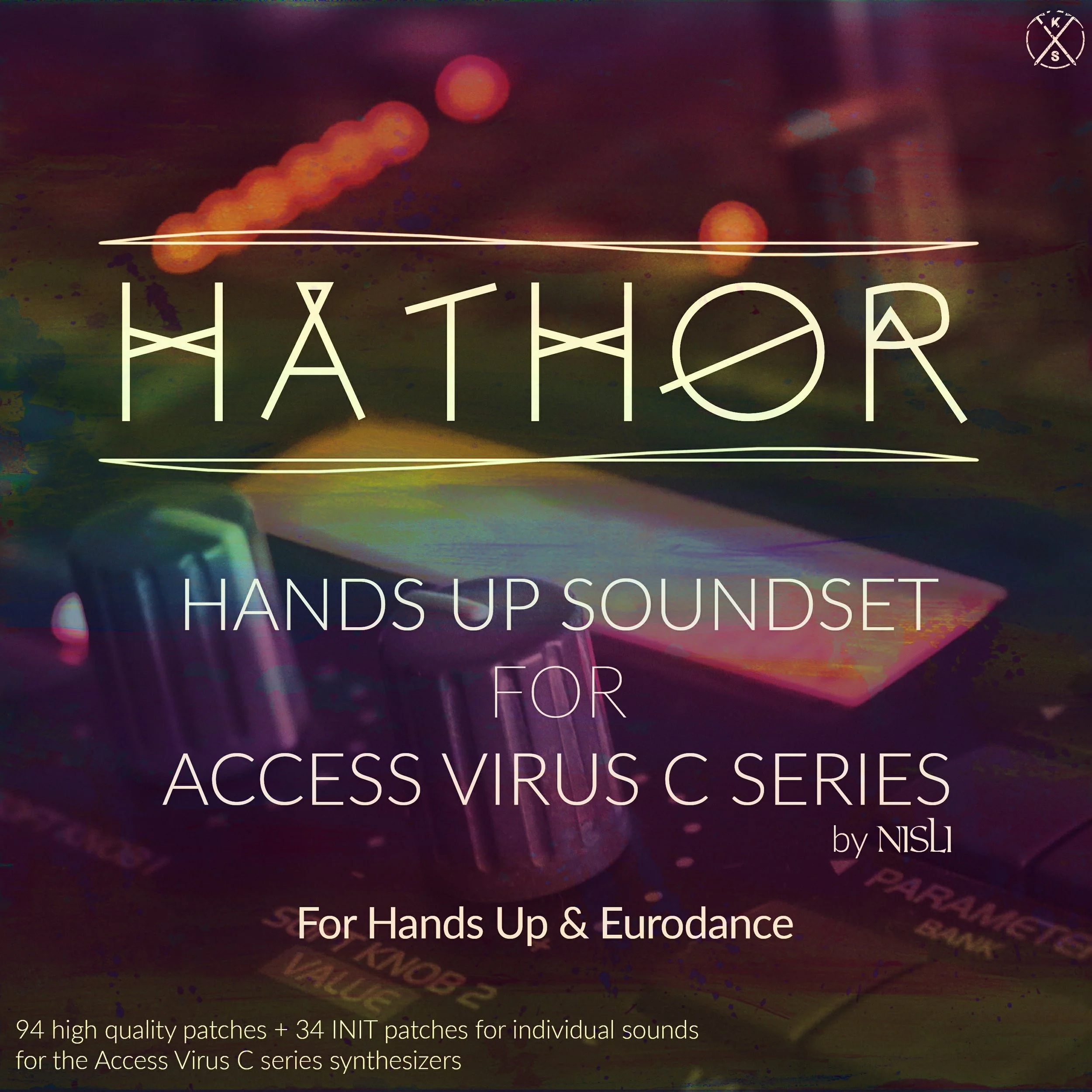
94 high-energy Hands Up presets, compatible with the legendary Access Virus TI synthesizer series. This soundbank is 100% Hands Up-oriented, which means no weird brass, pianos, or FX. The patches in Bounce! come straight out of songs written using Virus synths (and many more). So this soundset is designed to exploit the TI’s wavetables, HyperSaws, and multitimbral virtual analog sound engine to their fullest potential!
Patches in Bounce! are based on sounds from songs by the likes of Cascada, Tune Up!, Pulsedriver, Floorfilla, Gigi D’Agostino, Sven-R-G- vs Bass-T, DJ Shog, E-Type, Rob Mayth, Groove Coverage, Alex Megane, Discotronic, DJ Gollum, M.Y.C., Axel Konrad, Floorburner, and many many more!
And to cap off the bank some patches were set to Initial, so you have room to write and store your own patches without overwriting any existing sounds!
No additional FX were applied to these sounds post-recording
Sounds in this preset pack are suitable for the Hands Up and Eurodance genres, and are organized by category into Leads, Plucks, Pads, Acid sounds, and Basses, for quick reference
All patches are royalty-free and delivered instantly via email as a 24-hour download link
Requirements: Access Virus TI, TI2, Snow, or Polar synthesizer
Also compatible with Adam Szabo Viper VSTi,* DiscoDSP Retromulator, and the The Usual Suspects OsTIrus
*there will be some differences in some sounds due to differences in the architecture and features between the TI2 and Viper
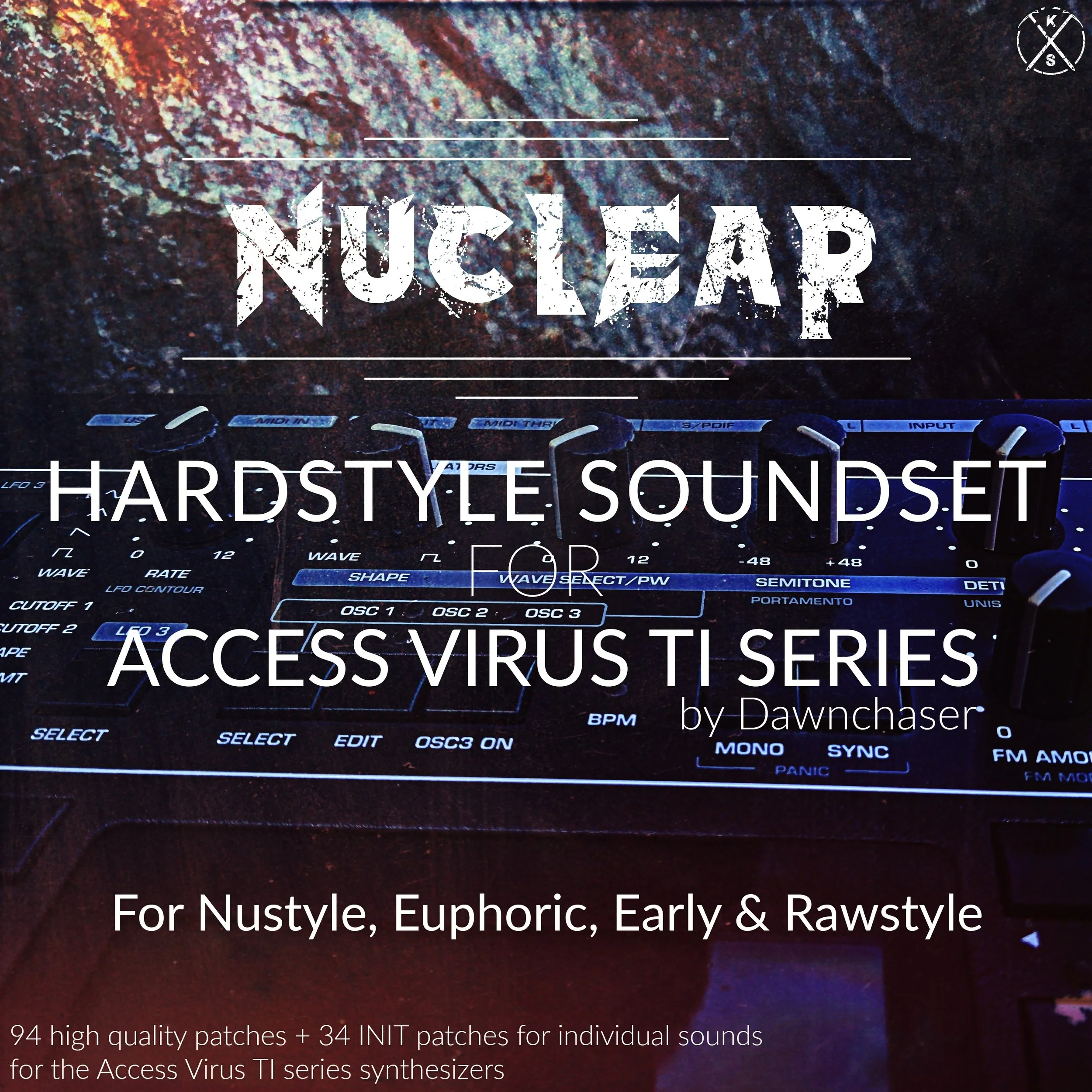
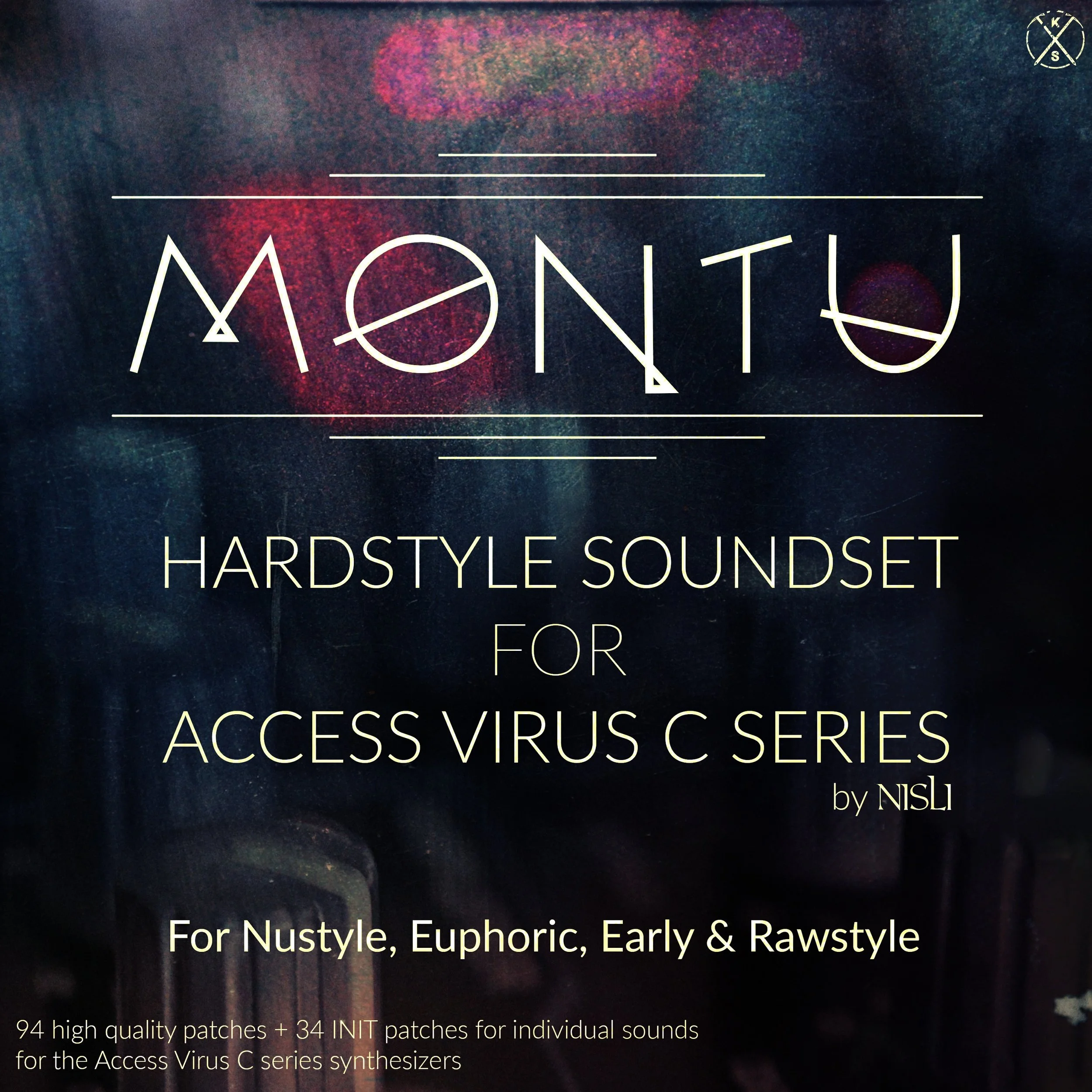
94 hard-hitting Hardstyle presets for the legendary Access Virus TI virtual analog synthesizer series. This soundbank is 100% Hardstyle-oriented, which means no weird brass, pianos, or FX. The sounds in Nuclear come straight out of songs written using the TI2. So this soundset is designed to fully exploit the TI’s wavetables, HyperSaws, and multitimbral virtual analog sound engine to their fullest potential!
Patches in Nuclear are based on sounds from songs by the likes of Anderex, Dual Damage, Digital Punk, Crystal Lake, Rooler, Zatox, Polish Punisher, Headhunterz, Phuture Noize, Brainkicker, Bloodlust, Fraw, The KGBs, SMD, Brennan Heart, Rejecta, Coone, Project One, Refuzion, Noisecontrollers, Donkey Rollers, Sickmode, Zany, Wasted Penguinz, The Prophet, and many many more!
And to cap off the bank some slots were set to INIT, so you have room to write and store your own sounds without overwriting any existing presets!
No additional FX were applied to these sounds post-recording
Many sounds use the Modwheel for added control
Sounds in this preset pack are suitable for the Early Hardstyle, Nustyle, Rawstyle, and Euphoric Hardstyle genres, and are organized by category into Leads, Plucks, Pads, Acid sounds, and Basses, for quick reference
All patches are royalty-free and delivered instantly via email as a 24-hour download link
Requirements: Access Virus TI, TI2, Snow, or Polar synthesizer
Also compatible with Adam Szabo Viper VSTi,* DiscoDSP Retromulator, and the The Usual Suspects OsTIrus
*there will be some differences in some sounds due to differences in the architecture and features between the TI2 and Viper

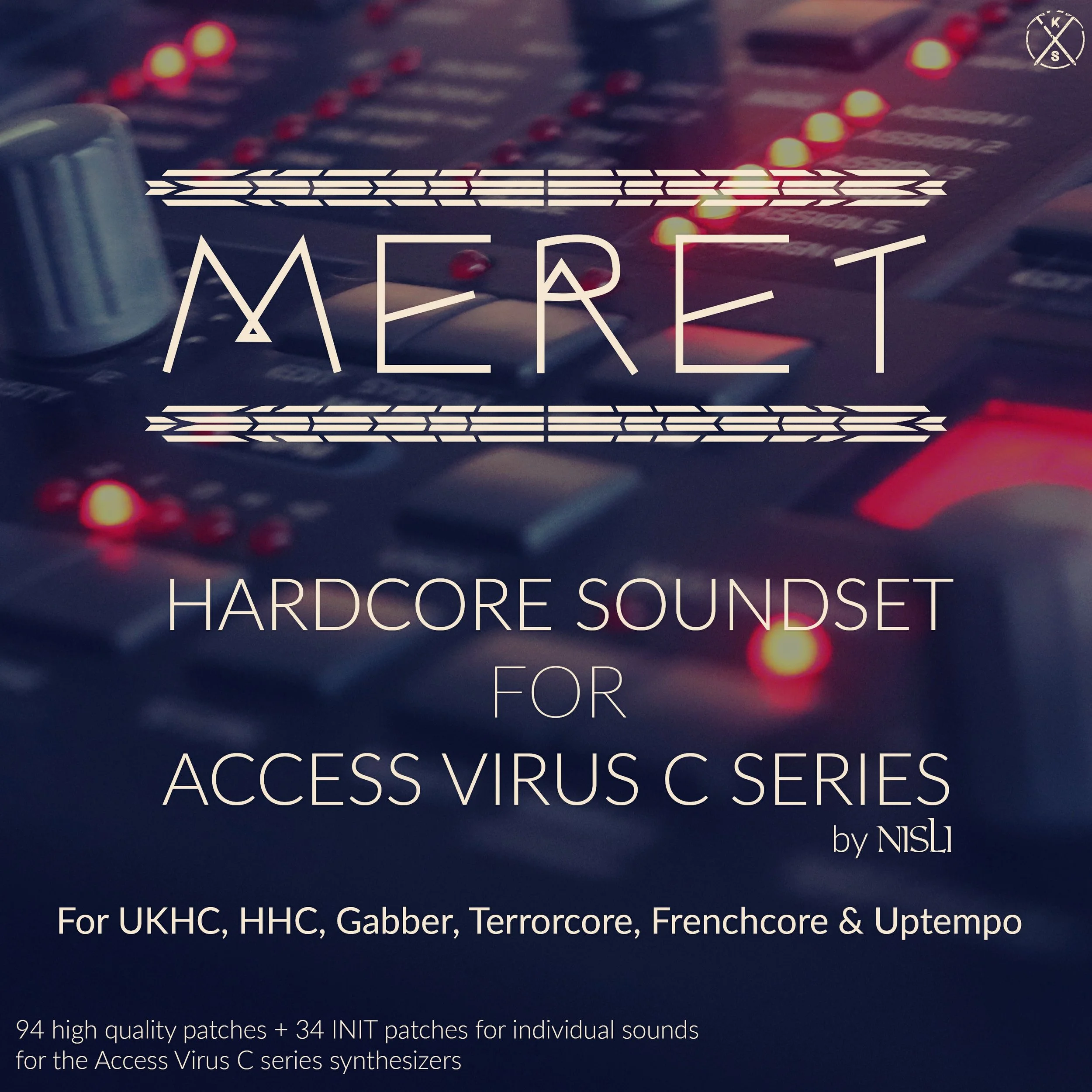
94 high-octane Hardcore presets for the legendary Access Virus TI virtual analog synthesizer series. This soundbank is 100% Hardcore-oriented, which means no weird brass, pianos, or FX. The sounds in X-Treme come straight out of songs written using the Virus. So this soundset is designed to fully exploit the TI’s wavetables, HyperSaws, and multitimbral virtual analog sound engine to their fullest potential!
Patches in X-Treme are based on sounds from songs by the likes of Angerfist, Dune, Miss K8, Scott Brown, Korsakoff, Sefa, Endymion, Ophidian, Hixxy, Brisk & Ham, The Speed Freak, Predator, Dr Peacock, Nexes, Triplestar, Plus System, Party Animals, Nosferatu, Gammer, Evil Activities, Neophyte, Dougal, The Viper, and many many more!
And to cap off the bank some slots were set to INIT, so you have room to write and store your own sounds without overwriting any existing presets!
No additional FX were applied to these sounds post-recording
Many sounds use the Modwheel for added control
Sounds in this preset pack are suitable for the UK Hardcore, Happy Hardcore, Terrorcore, Frenchcore, Gabber, and Uptempo genres, and are organized by category into Leads, Plucks, Pads, Acid sounds, and Basses, for quick reference
All patches are royalty-free and delivered instantly via email as a 24-hour download link
Requirements: Access Virus TI, TI2, Snow, or Polar synthesizer
Also compatible with Adam Szabo Viper VSTi,* DiscoDSP Retromulator, and the The Usual Suspects OsTIrus
*there will be some differences in some sounds due to differences in the architecture and features between the TI2 and Viper

94 hypnotic Psytrance presets, compatible with the legendary Access Virus TI series of hardware synths. This soundbank is 100% Psytrance-oriented, which means no weird brass, pianos, or clangs. The patches in Fractals come straight out of songs written using the TI2. So this soundset is designed to exploit the TI’s wavetables, HyperSaws, and multitimbral virtual analog sound engine to their fullest potential!
Patches in Fractals are based on sounds from songs by the likes of Infected Mushroom, Phaxe, Ace Ventura, Ovnimoon, Ajja, Filt, Vini Vici, Atmos, Morten Granau, and many many more!
And to cap off the bank some patches were set to INIT, so you have room to write and store your own patches without overwriting any existing sounds!
No additional FX were applied to these sounds post-recording
Sounds in this preset pack are suitable for the Full On Psytrance, Progressive Psytrance, Dark Psytrance, and Forest Psytrance genres, and are organized by category into Leads, Plucks, Pads, Acid sounds, and Basses, for quick reference
All patches are royalty-free and delivered instantly via email as a 24-hour download link
Requirements: Access Virus TI, TI2, Snow, or Polar synthesizer
Also compatible with Adam Szabo Viper VSTi,* DiscoDSP Retromulator, and the The Usual Suspects OsTIrus
*there will be some differences in some sounds due to differences in the architecture and features between the TI2 and Viper

95 groovy House presets, compatible with the legendary Access Virus TI series of hardware synths. This soundbank is 100% House-oriented, which means no weird brass, pianos, or FX. The patches in Pumpin’ come straight out of songs written using the Virus (and many more). So this soundset is designed to exploit the TI’s wavetables, HyperSaws, and multitimbral virtual analog sound engine to their fullest potential!
Patches in Pumpin’ are based on sounds from songs by the likes of Deadmau5, Tiesto, FISHER, Kygo, Robin Schulz, SOMMA, Alesso, Benassi Bros, Tony Igy, Hardwell, Blasterjaxx, ZHU, Martin Garrix, Porter Robinson, Jack Villa, Morgan Page, Mord Fustang, and many many more!
And to cap off the bank some patches were set to Initial, so you have room to write and store your own patches without overwriting any existing sounds!
No 3rd party FX were used in these sounds.
Sounds in this preset pack are suitable for the Progressive House, Deep House, Tech House, Bigroom House, and Electro House genres, and are organized by category into Leads, Plucks, Pads, and Basses, for quick reference
All patches are royalty-free and delivered instantly via email as a 24-hour download link
Requirements: Access Virus TI, TI2, Snow, or Polar synthesizer
Also compatible with Adam Szabo Viper VSTi,* DiscoDSP Retromulator, and the The Usual Suspects OsTIrus
*there will be some differences in some sounds due to differences in the architecture and features between the TI2 and Viper

94 driving Techno presets for the legendary Access Virus TI virtual analog synthesizer series. This soundbank is 100% Techno-oriented, which means no weird clangs, bleeps, effects, drums, shrieks, or cheesy 70s funk leads. The patches in Spiral come straight out of songs by big name artists of the 90s, 2000s, 2010s, and 2020s. So this soundset is designed to exploit the TI’s wavetables, HyperSaws, and multitimbral virtual analog sound engine to their fullest potential!
Patches in Spiral are based on sounds from songs by the likes of Argy & Goom Gum, Anyma, Chris Avantgarde, Stephan Bodzin, Tale Of Us, KAS:ST, CamelPhat, ARTBAT, DJ Andy De Gage, Innellea, Boris Brejcha, Eloim, Luigi Tozzi, DF90, Strobetek, Biocym, Aura Fresh, Jamida, Circuit Breaker, Emmanuel Top, MRAK, Reestar, Ekstendia, Slownoise, and many many more!
No additional FX were applied to these sounds post-recording
Many sounds use the Modwheel for added control
Sounds in this preset pack are suitable for the Melodic Techno, Deep Techno, Dub Techno, and Minimal Techno genres, and are organized by category into Leads, Plucks, Pads, Acid sounds, and Basses, for quick reference
All patches are royalty-free and delivered instantly via email as a 24-hour download link
Requirements: Access Virus TI, TI2, Snow, or Polar synthesizer
Also compatible with Adam Szabo Viper VSTi,* DiscoDSP Retromulator, and the The Usual Suspects OsTIrus
*there will be some differences in some sounds due to differences in the architecture and features between the TI2 and Viper

















$92.00 (MSRP $116.00 if purchased individually - Save $24 / 20%)
Unlock the ultimate high-energy mainstage collection for your Virus TI with the definitive library for the modern titan of digital hardware synths. The Kulshan Studios Essential Access Virus TI Trance Bundle brings together all four Ascension soundsets, delivering 370+ soaring leads, dreamy plucks, rolling basses, and majestic pads, all ready to drop into your next anthem.
Whether you are producing peak-time uplifting trance, classic 2000s club anthems, euphoric hard trance, or modern progressive tracks, this complete collection transforms your TI into an endlessly versatile dance music powerhouse. Every single patch leverages the signature Virus TI DSP architecture, utilizing rich stereo unisons, complex modulations, massive HyperSaws, and the legendary built-in effects.
Key Features:
Total Presets: 377 handcrafted RAM patches organized across 4 individual soundbanks (95 presets in Bank 1; 94 presets each in Banks 2, 3, and 4).
Hardware & Plugin Compatibility: 100% compatible with all Access Virus TI series hardware (Virus TI Desktop, TI Keyboard, TI2 Desktop, TI2 Keyboard, TI Polar, and Virus TI Snow). Fully compatible with software emulations including The Usual Suspects OsTIrus plugin (with appropriate firmware ROM), discoDSP Retromulator, and Adam Szabo Viper.
Zero Filler: Every soundbank is strictly genre-focused. No random clangs, useless sound effects, or out-of-place filler patches.
What's Included:
Ascension Trance Soundset: Pure, classic HyperSaw leads, uplifting plucks, majestic pads, and rolling trance basslines.
Ascension 2 Trance Soundset: Expansive stadium leads, soaring pads, and punchy basses and plucks.
Ascension 3 Trance Soundset: Driving leads, razor-sharp plucks, and deep bass patches.
Ascension 4 Trance Soundset: High-octane euphoric leads, 303-style acid sounds, and lush atmospheric pads.
What You Get:
All patches in standard .mid / .syx format, sorted into their specific bank folders inside a single bulk .zip file.
Why Grab The Essential Trance Bundle?
Purchasing these 4 trance banks individually at $29 adds up to $116. The Kulshan Studios Essential Access Virus TI Trance Bundle gives you instant access to Kulshan Studios' archive of world-class trance soundsets at a 20% discount, ensuring you have the exact right hardware patch ready the moment inspiration strikes in the studio.
(Note: This is a digital download containing SysEx / MIDI patch files. Loadable via Access Virus Control, standard MIDI librarian software, hardware SysEx dumps, or compatible VST emulations).
~ All bundles are excluded from additional discount codes and sales.